FEATURE
More diverse = more profitable
Research suggests that diverse companies are more commercially successful than non-diverse ones. What do publishers need to do to improve their diversity and, thereby, profitability?


Academic and scientific publishing runs on a different model from the rest of the industry. Its readers are mostly researchers and clinicians, and its customers are often the libraries and institutions they work for. What it really sells is confidence in the research record.
Open access has become the standard model, moving revenue away from subscriptions towards publishing charges and institutional agreements. Learned societies that switched early have used the change to build data and analytics products around their journals. Where research comes from is changing as well, with a growing share now produced in Asia.
However, it is a common misconception that open access somehow reduces the importance of the publisher. In reality, it is the opposite.
Niels Peter Thomas Academic media
AI raises the stakes. Fabricated papers test peer review on an industrial scale, and publishers are building integrity tools while deciding on what terms to license their content to AI developers.
Science also reaches general readers through magazines and specialist journalists, who face many of the same pressures as the rest of the press.
Below you'll find some of our best feature articles on academic and scientific media, from open access and research integrity to medical journals, institutional sales and science journalism, alongside our latest news and industry commentary.

We asked Niels Peter Thomas, chief executive officer of BMJ Publishing, what does best practice publishing look like in academic media? This is what he said…

The task ahead is clear, says Anke Beck: to harness AI not as a threat but as a catalyst.

Sara Sharman, head of content services, Institution of Engineering and Technology, tells Ciar Byrne about how the scientific / academic media sector is managing the digital transformation journey.

Laura Feetham-Walker, head of publishing strategy and performance, tells us how IOP Publishing is using AI now and where she sees the best opportunities for future development.
Pandemics, climate change, health inequality are all existential threats that require expert trusted analysis, and that is why BMJ’s content is increasingly in demand beyond its traditional audience.

With all the current talk around ‘post-truth’ and ‘alternative facts’, with people like Michael Gove saying they’ve “had enough of experts”, the newly rebranded Emerald Publishing – part of Emerald Group – is sticking to its core values. As Tony Roch
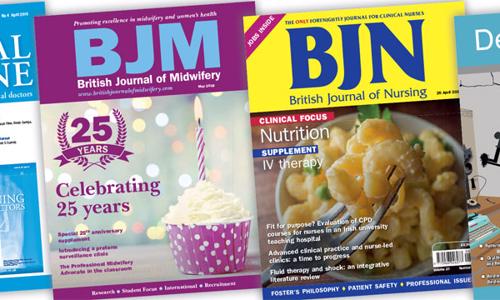
Mark Allen Group is a big believer in print… and a big believer in digital too! As Matt Cianfarani tells Ciar Byrne, digital publishing is opening up lucrative new revenue streams for the group’s healthcare titles.

Catherine de Lange of New Scientist was crowned Editors’ Editor of the Year at the BSME Awards. Here, she talks about her trend-spotting tricks, the “pub test” the team employ for stories & how she’s running a 70-year-old publication like a start-up.

With big issues like AI and robotics, climate change and space exploration, it’s difficult to keep science off the front pages. But what does all this mean for the science journalists and writers who are forever adding context and explanation?
Research suggests that diverse companies are more commercially successful than non-diverse ones. What do publishers need to do to improve their diversity and, thereby, profitability?

Design can make or break your publishing brand, so it’s worth putting in the time to get it right. There are four key areas that publishers need to focus on, says Andy Cowles.

IOP Publishing has finalised an uncapped transformative agreement with the Statewide California Electronic Library Consortium.

Retention makes the subscriptions world go round. Here are some top tips on how you can improve your retention rate.

Frontiers has announced that the journal Experimental Biology and Medicine (EBM), currently published by SAGE, will be transferring to Frontiers.

Stephens & George Print Group this week announced the acquisition of Pensord Press Ltd, Cambrian Printers Ltd and Pensord Digital, collectively known as the Pensord Print Group.

Research publisher Frontiers appoints Dr Anke Beck and Ms Nancy (Yinan) Chen as heads of public affairs and advocacy for Europe and China respectively.

Research publisher Frontiers has announced the appointment of Kanika Suri Mehra as chief people officer (CPO).

Frontiers has announced a new policy to make it easier for authors to retrospectively change their name or pronouns.

IOP Publishing and the Council of Australian University Librarians have agreed a three-year transformative agreement for unlimited open access publishing and access to IOPP’s journals.

The Professional Publishers Association is calling on government to refuse Royal Mail’s plans to stop Saturday letter deliveries.

The UK is a western liberal democracy. Press freedom is not one of the things we normally have to worry about…

Cambridge University Press & Assessment has announced that Professor Amira K. Bennison is the new Chair of its influential Academic Publishing Committee.

A new initiative, the Fully OA blog, has been launched by the Fully OA Group.

Frontiers has published articles from five more Nobel Prize winners to its Nobel Collection, which it launched last year.
