News
CUP sees increase in research published open access
Cambridge University Press has seen a 70 per cent increase in research published open access in its Transformative Journals.


Academic and scientific publishing runs on a different model from the rest of the industry. Its readers are mostly researchers and clinicians, and its customers are often the libraries and institutions they work for. What it really sells is confidence in the research record.
Open access has become the standard model, moving revenue away from subscriptions towards publishing charges and institutional agreements. Learned societies that switched early have used the change to build data and analytics products around their journals. Where research comes from is changing as well, with a growing share now produced in Asia.
However, it is a common misconception that open access somehow reduces the importance of the publisher. In reality, it is the opposite.
Niels Peter Thomas Academic media
AI raises the stakes. Fabricated papers test peer review on an industrial scale, and publishers are building integrity tools while deciding on what terms to license their content to AI developers.
Science also reaches general readers through magazines and specialist journalists, who face many of the same pressures as the rest of the press.
Below you'll find some of our best feature articles on academic and scientific media, from open access and research integrity to medical journals, institutional sales and science journalism, alongside our latest news and industry commentary.

We asked Niels Peter Thomas, chief executive officer of BMJ Publishing, what does best practice publishing look like in academic media? This is what he said…

The task ahead is clear, says Anke Beck: to harness AI not as a threat but as a catalyst.

Sara Sharman, head of content services, Institution of Engineering and Technology, tells Ciar Byrne about how the scientific / academic media sector is managing the digital transformation journey.

Laura Feetham-Walker, head of publishing strategy and performance, tells us how IOP Publishing is using AI now and where she sees the best opportunities for future development.
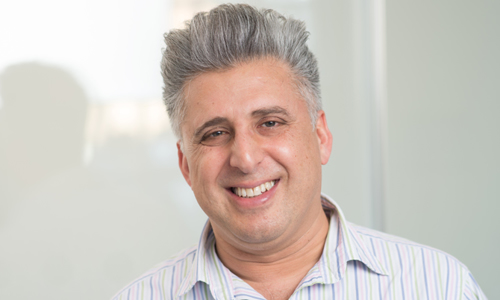
Pandemics, climate change, health inequality are all existential threats that require expert trusted analysis, and that is why BMJ’s content is increasingly in demand beyond its traditional audience.
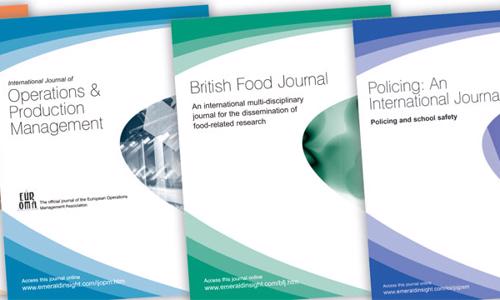
With all the current talk around ‘post-truth’ and ‘alternative facts’, with people like Michael Gove saying they’ve “had enough of experts”, the newly rebranded Emerald Publishing – part of Emerald Group – is sticking to its core values. As Tony Roch
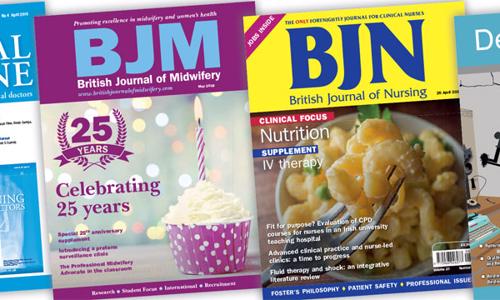
Mark Allen Group is a big believer in print… and a big believer in digital too! As Matt Cianfarani tells Ciar Byrne, digital publishing is opening up lucrative new revenue streams for the group’s healthcare titles.

Catherine de Lange of New Scientist was crowned Editors’ Editor of the Year at the BSME Awards. Here, she talks about her trend-spotting tricks, the “pub test” the team employ for stories & how she’s running a 70-year-old publication like a start-up.

With big issues like AI and robotics, climate change and space exploration, it’s difficult to keep science off the front pages. But what does all this mean for the science journalists and writers who are forever adding context and explanation?

Cambridge University Press has seen a 70 per cent increase in research published open access in its Transformative Journals.

The publishing industry gathered at The Grosvenor House Hotel for the annual Professional Publishers Association (PPA) Awards.

The Emerald Group last week announced they were acquired by Cambridge Information Group (CIG).

BMJ has announced that it is an official participating member of the STM Integrity Hub.

Emerald Publishing has announced that this year it will have an increased focus on commissioning Indigenous research.

The Spanish research community’s commitment to open access publishing has been bolstered by a new agreement between CSUC and Frontiers.

Frontiers has appointed Dr Julia Kostova as director of publishing development to lead the editorial strategy for the US market.

Guild, a platform for professional communities and networking, has appointed Gregor Young, formerly marketing technology director at the Financial Times as COO.
Pandemics, climate change, health inequality are all existential threats that require expert trusted analysis, and that is why BMJ’s content is increasingly in demand beyond its traditional audience.

Finland expands Frontiers’ Nordic cohort and joins ranks with Norway and Sweden in their commitment to Open Science, says Frontiers.

IOP Publishing is partnering with Get Full Text Research to make it easier for researchers to access published research or best available version.

The Swiss research community has strengthened its commitment to Open Access through a new national publishing agreement with the Lausanne head-quartered open-access publisher Frontiers.

Single sign-on provider OpenAthens announced De Gruyter as the winner of the third annual Best Publisher User Experience (UX) Award 2022.

IOP Publishing has established a new, unlimited, transformative open access agreement with the Max Planck Society, taking an important step forward in the transition of its journals to open access.

To mark International Women’s Day, Emerald Publishing has announced its commitment to helping break gender bias in academia by committing to improving the representation of women.
