







Using AI for content discoverability
AI tools are already helping publishers improve the discoverability of their content. Brian Alford, founder and CEO of Bright Sites, looks at what’s possible now and what’s coming down the line.
A couple of years ago, the AI question for most publishers was whether to experiment. That has been settled. AI is now at work in newsrooms, archives, ad sales and production, and the harder conversation is about what it is doing to the business around it.
Search is the pressure point. Answer engines summarise journalism without sending the reader on, and referral traffic is falling as a result. Publishers are split between signing licensing deals and blocking crawlers, with more of them now looking to negotiate collectively. Before any contract is signed, it is worth knowing which of your content is genuinely hard to replace and exactly what rights are being sold.
AI might be able to knock out something quickly, but speed isn’t the same as value and fluency isn’t the same as truth.
Toby Wiseman AI in practice: Hearst UK
Inside the business the picture is brighter. Regional groups use AI-assisted reporting for routine local stories, which frees other reporters to get out of the office. B2B publishers have turned deep archives into search tools that answer readers' questions, and at least one has sold subscriptions off the back of it.
Whether the human checks survive cost pressure is the open question. So far, the industry's bet is that original, specialist journalism and a direct relationship with readers will hold their value however the technology moves.
Below you'll find some of our best feature articles on AI in publishing, from licensing strategy and search to newsroom case studies and editorial policy, alongside our latest news and industry commentary.
Before rushing in to make deals with AI companies, publishers need to properly evaluate the value of their content, says Sajeeda Merali, CEO of the Professional Publishers Association.
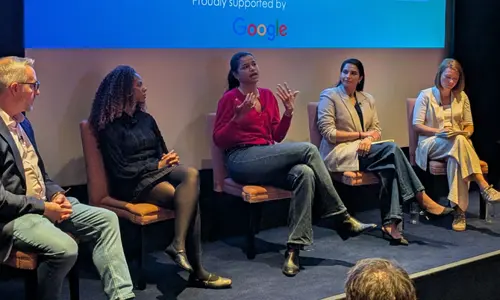
The biggest puzzle for publishers today is where to find audiences and how to keep them. How to meet this challenge was the focus of the latest AOP CRUNCH event, writes AOP’s Richard Reeves.
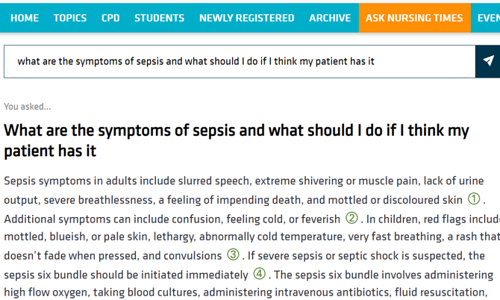
emap’s Nursing Times was quick to explore the potential of AI when it launched its LLM search service last year. Sixteen months on, Robin Booth tells us what they’ve achieved so far and how they plan to use AI next.
Newsquest has published over 10,000 articles with the aid of AI. Jody Doherty-Cove, head of editorial AI, tells us how and why Newsquest is deploying AI across its newsrooms.
Toby Wiseman, MD, content, tells us how Hearst UK is using AI now and where he sees the best opportunities for future development.
Most publishers are trialling AI tools to some degree, but how many are actually seeing quantifiable benefits from their efforts? Meg Carter talks to Ana Jakimovska, head of AI strategy at Mediahuis, about their approach to AI adoption.
Steve Pinches, chief product and technology officer at Which?, looks at the tech opportunities and challenges facing his company and the wider consumer publishing sector.
Peter Barr-Watson, chief technology officer at The Independent, looks at the tech opportunities and challenges facing his company and the wider news media sector.
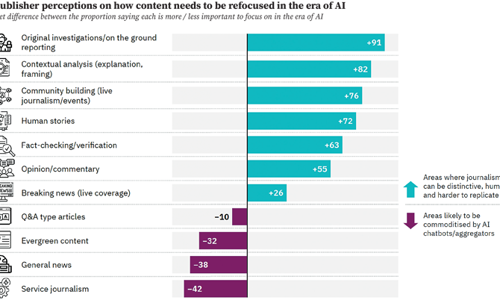
Reuters Institute’s ‘Journalism, media, and technology trends and predictions 2026’ report shows how publishers are reacting to the twin threats from AI answer engines and human creators, writes Nic Newman.
Having humans involved in the process has been what’s given publishers the license to explore all that artificial intelligence has to offer…
AI tools are already helping publishers improve the discoverability of their content. Brian Alford, founder and CEO of Bright Sites, looks at what’s possible now and what’s coming down the line.
Publishers need to think through the copyright implications of their AI activities, sooner rather than later. Daniel Lord, founder and CEO of Content Catalyst, has some advice…
Increasing personalisation has been a trend for some time now and AI will help to accelerate it. Aliya Itzkowitz, manager at FT Strategies, looks at the possibilities, now and in the future.
Publishers were quick to identify workflows as one area AI could help streamline and make more efficient. Stewart Robinson, managing director of Full Fat Things, looks at the opportunities.
Much of publishers’ initial interest in AI was text-based, but AI’s potential to make a huge impact on image creation and editing soon became apparent. Derek Milne, commercial pixometrist at Pixometry, looks at what’s possible.
Publishers are experts at creating content, but one of the most exciting things about AI is the way it can help optimise that content. Tom Pijsel, VP product management at WoodWing, explains how.
Newsquest has published over 10,000 articles with the aid of AI. Jody Doherty-Cove, head of editorial AI, tells us how and why Newsquest is deploying AI across its newsrooms.
Immediate Media has adopted a company-wide approach to AI, involving all roles and all departments. Hannah Williams, MD, digital content, explains their thinking.
emap has used AI to significantly expand its product offering. Robin Booth, managing director, tells us about their approach.
William Reed has a test and learn philosophy and is looking to integrate AI across all departments. John Barnes, chief digital officer, gives us some examples.
‘Audit’ and ‘content’ are two words that send shivers down the spines of many editorial types. Link them together in a single sentence and the shivers can turn into apoplexy, writes Jim Bilton.
Following successful pilots, Springer Nature is rolling out two new bespoke AI tools to support the identification of papers that contain AI-generated fake content and / or problematic images.
Readly has revealed a new branding concept for its summer campaign "What type of Reader are you?"
The PPA has released its reaction to the Labour manifesto.
Onetag says its AI-driven Smart Curation technology aims to help programmatic buyers increase campaign performance, scale and addressability.