COLUMN
Some takeaways from our March / April issue
James Evelegh picks out some takeaways from the March / April 2026 issue of InPublishing magazine.


A couple of years ago, the AI question for most publishers was whether to experiment. That has been settled. AI is now at work in newsrooms, archives, ad sales and production, and the harder conversation is about what it is doing to the business around it.
Search is the pressure point. Answer engines summarise journalism without sending the reader on, and referral traffic is falling as a result. Publishers are split between signing licensing deals and blocking crawlers, with more of them now looking to negotiate collectively. Before any contract is signed, it is worth knowing which of your content is genuinely hard to replace and exactly what rights are being sold.
AI might be able to knock out something quickly, but speed isn’t the same as value and fluency isn’t the same as truth.
Toby Wiseman AI in practice: Hearst UK
Inside the business the picture is brighter. Regional groups use AI-assisted reporting for routine local stories, which frees other reporters to get out of the office. B2B publishers have turned deep archives into search tools that answer readers' questions, and at least one has sold subscriptions off the back of it.
Whether the human checks survive cost pressure is the open question. So far, the industry's bet is that original, specialist journalism and a direct relationship with readers will hold their value however the technology moves.
Below you'll find some of our best feature articles on AI in publishing, from licensing strategy and search to newsroom case studies and editorial policy, alongside our latest news and industry commentary.

Before rushing in to make deals with AI companies, publishers need to properly evaluate the value of their content, says Sajeeda Merali, CEO of the Professional Publishers Association.
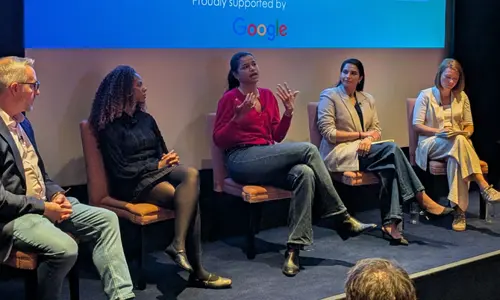
The biggest puzzle for publishers today is where to find audiences and how to keep them. How to meet this challenge was the focus of the latest AOP CRUNCH event, writes AOP’s Richard Reeves.
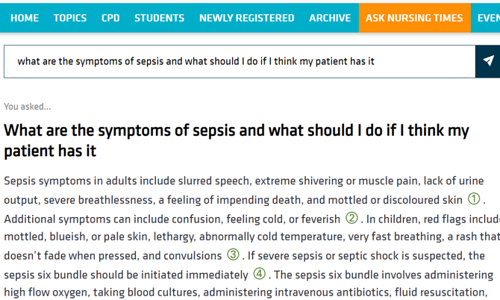
emap’s Nursing Times was quick to explore the potential of AI when it launched its LLM search service last year. Sixteen months on, Robin Booth tells us what they’ve achieved so far and how they plan to use AI next.

Newsquest has published over 10,000 articles with the aid of AI. Jody Doherty-Cove, head of editorial AI, tells us how and why Newsquest is deploying AI across its newsrooms.

Toby Wiseman, MD, content, tells us how Hearst UK is using AI now and where he sees the best opportunities for future development.

Most publishers are trialling AI tools to some degree, but how many are actually seeing quantifiable benefits from their efforts? Meg Carter talks to Ana Jakimovska, head of AI strategy at Mediahuis, about their approach to AI adoption.

Steve Pinches, chief product and technology officer at Which?, looks at the tech opportunities and challenges facing his company and the wider consumer publishing sector.

Peter Barr-Watson, chief technology officer at The Independent, looks at the tech opportunities and challenges facing his company and the wider news media sector.
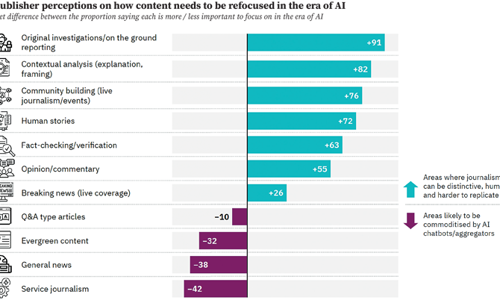
Reuters Institute’s ‘Journalism, media, and technology trends and predictions 2026’ report shows how publishers are reacting to the twin threats from AI answer engines and human creators, writes Nic Newman.

Having humans involved in the process has been what’s given publishers the license to explore all that artificial intelligence has to offer…

James Evelegh picks out some takeaways from the March / April 2026 issue of InPublishing magazine.

From the Policing and Media Charter to AI and access, Dawn Alford, chief executive of the Society of Editors, tells us why collective action is essential for trusted journalism.
The results are in for the AOP’s annual ‘Digital Publishing: Outlook and Priorities’ survey. Richard Reeves summarises the main findings.

Dickon Ross has been an editor so long that he finds himself wondering if he should consider doing something else…

Ian Mulvany, chief technology officer at BMJ Group, looks at the tech opportunities and challenges facing his company and the wider scholarly publishing sector.

New tech and new approaches to producing and consuming news are forcing publishers to have a root and branch rethink of how they do things. Phil Clark attended the recent ‘News in the Digital Age’ conference to find out more.
Reuters Institute’s ‘Journalism, media, and technology trends and predictions 2026’ report shows how publishers are reacting to the twin threats from AI answer engines and human creators, writes Nic Newman.

What’s around the corner and are you ready for it? Is anyone at your company keeping watch. Someone should be, says Jim Bilton.

Springer Nature’s 2025 annual report shows increased impact and value, a focus on OA and investments in technology and AI accelerated knowledge sharing, enhanced research integrity and improved the publishing process.

Copilot and similar AI drafting tools are amazing, but journalists should be extremely wary of them…

Ozone has announced the launch of Ozone Labs for AI experimentation into the future of publishing and marketing.

The Professional Publishers Association has unveiled the shortlist for the PPA Awards 2026, with winners set to be announced on 17 June 2026.

Frontiers’ head of editorial ethics and quality assurance has been elected as a trustee of Committee on Publication Ethics.

Springer Nature last week published its full year financial results for 2025 with very strong business performance delivered in 2025 and continued growth expected in 2026.

Future has officially introduced Helix, an audience intelligence engine designed to drive commercial outcomes for advertisers.
