FEATURE
Tense, nervous adjectives?
Those who write copy may fancy themselves a healthy crowd, but as Andy Maslen shows, they are prone to occupational illnesses quite as severe as those found in more rugged work environments.


B2B publishing has quietly become one of the healthier parts of the industry. The trade press that once lived on display and recruitment advertising now earns more of its money from subscriptions, data, events and membership, and private equity has noticed.
The shift meant giving up some old habits. Controlled circulation made sense in print, but open websites gave away what the magazine kept for qualified readers, and the publishers doing best have taken back control of their audiences through registration and paywalls. The Lawyer moved from an advertising-led business to one where paid content brings in over 40 per cent of revenue.
Don’t delude yourself because the barriers to entry in publishing are now non-existent.
Amanda Barnes B2B media
Specialist knowledge is the defence. AI makes generic information close to worthless, so the value lies in proprietary data, tools readers rely on in their daily work and journalism only a specialist could produce, as Computer Weekly's Post Office investigation showed. Print hasn't vanished either. Some publishers now sell it alongside digital at the same price and let readers choose.
Below you'll find some of our best feature articles on B2B and trade media, from subscriptions and data products to events, print, consolidation and specialist journalism, alongside our latest news and industry commentary.

We asked Amanda Barnes, chief executive of Faversham House, what does best practice publishing look like in B2B media? This is what she said…

Rory Brown has enjoyed great success in business media. Having last year sold AgriBriefing and now following new paths in the B2B space, he takes some time out to tell us what he has learned on his journey so far…

Print is certainly not dead, says Chairman Mark Allen. However, you need to offer readers choice and be neutral and agnostic about the outcome.

The Lawyer has been on quite a journey, successfully transitioning from a controlled circulation ad-driven model to a high value enterprise subs one. Andy Baker talks Meg Carter through the key stages and what they’ve learnt along the way.

In the first of our new ‘Digital Horizons’ series, Tom Lake, director of product and technology at Infopro Digital, looks at the tech opportunities and challenges facing his company and the wider B2B sector.

The future of B2B lies in serving your sector in three connected ways: information, intelligence and events.

John Barnes, chief digital officer, William Reed Business Media, tells Ciar Byrne about how the B2B media sector is managing the digital transformation journey.

Computer Weekly deserves much credit for its role in investigating the Horizon IT scandal. Dickon Ross looks at what lessons other B2B journalists can take from their work.
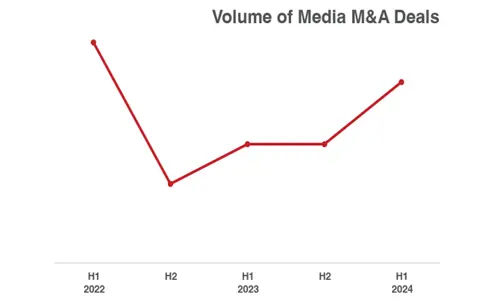
The general expectation is that the buying and selling of media brands is going to increase significantly in 2025. A number of companies have been quietly building up their war-chests during a wobbly 2024, reports Jim Bilton.

If you’re thinking of setting up a membership scheme, be prepared to play the long game because success doesn’t come overnight.

Those who write copy may fancy themselves a healthy crowd, but as Andy Maslen shows, they are prone to occupational illnesses quite as severe as those found in more rugged work environments.

How much are your free readers worth to you? Not sure? The chances are that you know their cost but not their value. A combination of traditional accounting practices and a lack of analysis tools have contributed to this ignorance. Charles Arthur, wh

Why are so many subscription ads lacklustre? How is it that, when publishers spend so much time promoting the efficacy of ‘advertising’, their own creations look so rushed and uninspired? Peter Hobday ponders this and gives his dos and don’ts of subs

A third of total newstrade sales is through the independents, but does publisher marketing activity reflect that fact? Peter Wagg thinks not, although there are some encouraging signs of change. He argues that a more indie focussed strategy, coupled

Winning the right to hold the 2012 Olympics was a cause of much celebration in London on 6th July – and despair in Paris. What impact, if any, will hosting the games have on the publishing industry? Chris Collins looks into the future to predict the

The retail landscape is changing for both multiples and indies. Publishers need to develop more sophisticated, segmented strategies based on an awareness of the needs of the individual retailer, the individual shopper and the magazine category as a w

It is not only in the UK where publishers and retailers do not always see eye to eye. In the US, retailers are increasingly questioning the value of the magazine category. Karlene Lukovitz looks at recent publisher and distributor initiatives to win

The web represents an alternative route to market – be it via digital editions or other forms of online content provision. However the print / online relationship is symbiotic with the primary source of subscription orders for many print titles now b

In the US, a day doesn’t go by without the appearance of multiple news items relating to publishing companies racing to become “media-neutral” in response to the internet’s formidable competition for time and dollars. Karlene Lukovitz takes up the st

Barely a stone’s through away, and with a population of over 60m, the French market has lots to tempt UK publishers, though the small matter of language and a vibrant domestic publishing sector don’t help. COMAG’s Graeme King gives an overview of the

The advent of internet research tools – often free – has seen an explosion in use as publishers, editors and marketers all aim to increase understanding of their readers. Anthony Ray, a member of the Market Research Society, offers a few thoughts on

Despite their importance, many publishers adopt a mechanistic, almost minimalist, approach to renewals. Readers are informed of the impending expiry but little effort is made to resell the magazine. Anne Kottler shows how the new trend in branded ren

Seismic shifts are occurring in the supply chain and the main players – publishers, distributors, wholesalers and retailers – are all struggling to make sense of the changing equilibrium. When the dust settles who will be on top? Deloitte’s Terri Lin

Gone are the days when the “average net circulation” was the be all and end all of ABC reporting. Intelligent media buyers are now spending as much time analysing the numbers behind the headlines as they are on the top line figures themselves. Lucy B

One of the most notable features of the best database installations is that many of the key benefits emerging over time are not those planned at the outset. The Economist’s Simone Wieser talks us through her experiences.
