News
Conde Nast invests in farfetch
Condé Nast International has led a $20m investment in farfetch, the e-commerce marketplace for independent fashion boutiques.


Magazine editors have always sold things. A recommendation in a trusted title moves product, and ecommerce is the attempt to get paid for that influence directly rather than through the advertising around it.
There are several ways in. Affiliate links in reviews and buying guides earn commission when readers already intend to buy. Others go further: Marie Claire built a shopping platform carrying more than a million products, while the London Review of Books grew a small online shop into a business with its own US warehouse. Hearst has turned the Good Housekeeping Institute's product testing into accreditation and licensing.
Get it right, and the revenues will flow. Get it wrong, and you’ll wish that you’d stuck to the knitting.
Jim Bilton The Ecommerce Challenge
For most publishers commerce is still a small share of revenue, and the risks are real, from culture and technology to the trust readers place in editorial. Disclosing commercial links tends to help conversion rather than hurt it, and smaller publishers have done well by testing cheaply before committing.
The ground is shifting as well. Shoppers increasingly research products through AI search and social creators, and much of the credit for a sale ends up with cashback and voucher sites.
Below you'll find some of our best feature articles on ecommerce and affiliate revenue for publishers, from affiliate content and online shops to licensing and trust, alongside our latest news and industry commentary.
Ecommerce – the future of media or a dangerous distraction? Get it right and it can transform your company’s financials. Get it wrong, writes Jim Bilton, and it can destroy your business. And there are plenty of examples of both.
Inject personality into e-commerce content by showing audiences the individual recommending the products, and why they’re qualified to do so, says Beth Crane, director of commercial growth.

In a time when consumers are being offered content for free, new revenue streams for publishers are always worth exploring. Keith Walker explains the lessons learned regarding affiliate revenue and what it means for your brand.
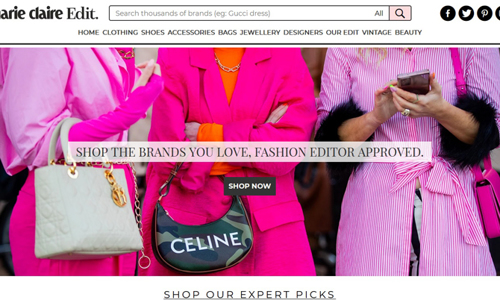
One publishing brand that seems to have nailed ecommerce is Marie Claire, both in the UK and, more recently, in the US. Ciar Byrne looks at its winning strategy.
LRB’s strategy is to engage its audience with new and exciting products as well as creating new iterations of its cult ranges, says Jill Tytherleigh, head of e-commerce and product development.
The future of Singletrack World’s e-commerce strategy focuses on two key areas: reducing friction and consolidating touchpoints, says Mark Alker, co-founder.

Consumer magazine media has a bright future, James Wildman tells Meg Carter, because of the substantial opportunities to build new revenue streams on the back of deep reader engagement.

The border busting reality of digital publishing has radically altered the traditional licensing model. But opportunities still abound to leverage your brand in overseas markets. Peter Houston reports.
Ecommerce is often cited by publishers as an obvious area for revenue diversification. But how to make a success of it?

Condé Nast International has led a $20m investment in farfetch, the e-commerce marketplace for independent fashion boutiques.

Hearst Magazines UK, the Hearst Corporation’s principal business in the UK, has agreed an exclusive partnership with The Hut Group to create what it describes as, a unique concept in online shopping.

Just over a year ago, private equity company Exponent acquired BBC Magazines and merged it with Magicalia and Origin to create Immediate Media Co – a major new player in the magazine marketplace. Meg Carter talks to chief executive Tom Bureau about t

Johnston Press plc has signed a new partnership with Coinks, part of an online intelligent promotional marketing services company, to help grow its online daily deals platform.

Grazia, the weekly glossy for upscale women, has launched its innovative weekly iPad edition, a game-changing magazine product for the glossy market available exclusively on Newsstand, says Bauer Media.

Mail Newspapers has launched the first version of its Mail Plus application on Amazon's new Kindle Fire and Kindle Fire HD tablets.

Licensing magazine brands to physical consumer products is hardly a new concept, writes Karlene Lukovitz, but it’s among the revenue channels being pursued more aggressively and innovatively by what we now call “magazine-based media companies”.

A number of surveys conducted earlier in the year highlighted the continuing blurring of boundaries between publishers and retailers. Both are starting to behave like the other! Henry Hyder-Smith looks at these survey results to see what each sector

This week sees the release of the Christmas Gift Guide campaign for Superdrug produced by content marketing agency River.

Rick Wakeman and Classic Rock Magazine have teamed up to exclusively release ‘Journey To The Centre Of The Earth’, the exclusive re-recorded masterpiece presented in its entirety for the first time.

The Guardian has unveiled the Guardian Collection, a new range of products, whose origins each have a story that will inspire and delight, says the company.

The Financial Times has announced the launch of FT Jobs, a new website in the United States featuring senior career opportunities.

Despite our truly abysmal summer, Gardeners’ World, which relaunched its magazine in March 2011, has continued to build momentum this year. Publishing director Dominic Murray tells us why the brand is thriving.

Following Britain’s brilliant hosting of the Summer Olympics, writes Karlene Lukovitz, what better topic to continue this survey of magazine brand extensions than games?

Good Housekeeping (GH), the leading women’s lifestyle magazine published by Hearst Magazines UK, has launched a brand new travel website.
