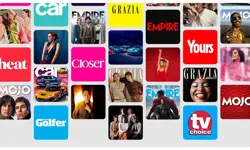
If a publisher is like a managing director, then Lauren Holleyoake is three MDs rolled into one. In her current role at Bauer, she oversees a trio of very different titles: fashion and beauty brand Grazia, iconic film magazine Empire, and music mag Mojo. The one thing they all have in common is that they are trusted premium titles with loyal audiences.
It certainly makes for a varied job and as she is responsible for delivering and driving revenues across the three brands, every day is different. “I’m just as happy buried in a spreadsheet as I am in a creative brainstorm with the editorial teams, or meeting clients,” she says. “They are three different titles, but the audiences are similarly discerning. They are all high quality, and the audience expects intelligent writing and points of view,” she adds.
[SH]Different revenue models
While all three brands enjoy a high level of prestige, their business models are quite different. On Empire and Mojo, subscriptions make up a big percentage of the revenues, and both titles also see a higher proportion of overseas sales. Mojo sells the same number of copies in the US as in the UK. Grazia, on the other hand, is much more advertising focused, with more revenues coming from commercial partners than newsstand. “The job is to drive demand in the brand, whether that’s from consumers or from advertisers,” says Holleyoake.
She began as publisher of Grazia, a post she has held for twelve years, then in 2021, Mojo and Empire were added to her portfolio. To begin with, she was “a bit nervous” about how she would manage the balance, but now she generally spends about half her time on Grazia, which is “the bigger beast” and 25% on the other two titles respectively, although that changes if there is a big project underway on one of these.
As Grazia is largely advertising driven, when it comes to the publishing strategy for the brand, Holleyoake is very much focused on ensuring it is “a trusted and influential environment for advertisers”. If you are going to do print, she believes it is important to do it well. “You should present it beautifully, and it should feel very tangible,” she says. Last year, she and Editor-in-Chief Hattie Brett (who is stepping down and Holleyoake is currently interviewing for a successor) went to the board of Bauer to pitch for investment to elevate the production values. The print magazine used to be saddle stitched with perfect bound editions twice a year on fashion and luxury. Now, every issue is perfect bound with better paper stock – “because that is a signifier to consumers and advertisers that you’re in a premium environment”. At the same time, they raised the cover price and gave greater focus to the Instagram messaging around fashion and beauty to elevate the brand digitally. As a result, clients are spending more with them this year than they did the previous year, they have brought in some new advertisers and have achieved what they set out to do.
On Empire and Mojo, increasing subscriptions and newsstand sales is still the best way to drive revenues. In the US, the titles used to be on sale in premium retailers, but now with Mojo, they have an expansion project to try to get into more of the wholesale outlets. With Empire, the focus is on digital advertising growth, and they have several interesting projects this year both with core film partners and with non-core partners. Meanwhile, the podcast is going from strength to strength with the main Empire podcast free, while listeners pay a subscription fee for Spoiler Specials. There is also the free Pilot podcast focusing on TV and Pilot+ for subscribers, with potential for driving all these bundles of revenue streams harder, says Holleyoake.
Apple News is another area of interest, where they saw real growth in 2025, particularly with Grazia. Here, they are tapping into a US audience, making it feel like an incremental opportunity. While it doesn’t offer the same breadth on its Apple News channels as in the magazine or on other digital platforms, the key is hitting on what connects with this audience. Celebrity does particularly well, although in general, they do less of it elsewhere in the magazine these days.
[SH]Going deeper
When it comes to achieving growth in the current climate, Holleyoake believes there is no point chasing reach and scale. Instead, she prefers a focus on going deeper and super-serving audiences. For instance, Mojo Collectors offers a deep dive into a single artist. “We do ten of those a year and that’s about understanding that some people are diehard artist fans and there’s an interesting opportunity to go super deep on that,” she says.
On Grazia, the emphasis is on serving ‘mini communities’ with projects such as The Juggle, an online community for readers who are also parents, interiors magazine Grazia Casa and the standalone Grazia Beauty for the segment of their audience who are super beauty conscious.
The Empire podcasts and special film screenings for readers also present opportunities for depth rather than breadth. “It’s about always trying to understand where your audience is moving to and how you can best serve them there and understand what that sweet spot is,” says Holleyoake.
Like all established media brands, one of the biggest challenges facing her portfolio is how to protect trusted environments in the current climate. “We’ve got this digital world where those big players aren’t really being held to the same account, which I think is increasingly a problem for all of us. Not just because we work in that industry, but because we’re parents and we’re worried for what that represents, the largely uncontrolled content that is out there.” In a landscape where truth is constantly being eroded, she insists the trusted environments she oversees can bring value to an advertiser’s brand.
When it comes to AI, Bauer wants to embrace the opportunities it offers, whether that is in terms of workflow or speeding up processes, but Holleyoake is adamant that “human curation is still really important”. She adds: “The brands I look after are very much about quality, brilliant, intelligent writing. In a sea of AI slop, we can stand out for bringing that.”
At last year’s PPA’s Independent Publisher Conference, she talked on stage about ‘bringing big brand energy’, a phrase she borrowed from the editor of Today’s Golfer. “What I like about that phrase is I think that magazine brands can forget the power that these brands still have in people’s minds and hearts and I see every day and every week how much consumers and partners value our brands.” She quotes Quentin Tarantino who once said, “Movies are my religion and Empire is my church.” All three of her brands have huge cultural resonance, she argues, with labels and artists eager to appear in Mojo and fashion brands and politicians keen to feature in Grazia. “The only prime minister we didn’t interview was Liz Truss because there wasn’t the time. Fashion brands want to be in the pages of Grazia, politicians want to talk to us because they see us as a powerful brand that can connect with this audience that they really need to speak to.”
They recently did some work with Bauer Outdoor Media to analyse the impact of showing the same adverts with and without the Grazia logo. The results were “incredible” with the branding having a significant impact not just within their readership and all those who have read the magazine in the past, but even on those who didn’t know Grazia. “Demonstrably, Grazia can lend its established brand equity to lesser-known brands and when people were exposed to the Grazia-branded creative, we saw increases in brand attributes – the biggest increases were expert-backed, trend-leading and premium. Even people who weren’t aware of Grazia saw this stamp of expertise. That’s probably the best demonstration that we have real power as a brand.”
[SH]Premium print
Although she doesn’t believe we are about to see a huge renaissance in print, she gets annoyed when people say the medium is dead, arguing that people will still invest in reading about their passion or fandom. “As long as your content is driving a passion in someone, of course there’s a role for it.”
She has recently overseen the introduction of bookazines at Bauer. Although they have always produced special editions to accompany Mojo and Empire, she admits they were “pretty late to the party with bookazines in a formal way”. In quarter four of last year, they started dipping their toe in, and it made sense for Holleyoake to look after the project as there are synergies with her portfolio. By their nature, bookazines need to have premium production values to match the high cover price, with a lot of the revenue coming from overseas. Last year’s titles included Play Better Golf, a Porsche special and Greatest Movie Icons under the Yours Retro brand. This year, there are titles on the Golf Masters, Ferrari, Ageing Well and Marilyn Monroe. Sales are entirely from newsstand with most coming from the US, in particular Barnes & Noble.
“The idea is we can use evergreen content that we’ve got in the archives, we go after fandoms or dedicated hobbyists and super-serve them. It aligns well with our portfolio and we’ve got the content. It’s trying to create some better processes around how we resurface that and the distribution strategy around it,” explains Holleyoake.
Bookazines linked to the Empire and Grazia brands will be announced later in the year.
“Ultimately, these three titles are really profitable, it’s about continuing to drive revenues and profits, and understanding new ways that we can connect with the audience, and it’s about depth,” she concludes.