





B2B growing pains
Just how far have US B2Bs gone in reengineering themselves for the 21st century? Limited resources, caution and print-focused attitudes are holding some back. BPA’s Karlene Lukovitz takes soundings from senior publishing execs.
Consumer magazines spent most of the past two decades managing decline. The more confident publishers have stopped doing that. Newsstand sales and print advertising are still shrinking, but well-made titles with loyal readers are raising cover prices and growing.
Scale matters less than it did. Bauer has made Grazia a more premium product and charged more for it, while independents such as Anthem have put print back at the centre of the business and grown their export sales. Stylist has changed format several times without losing its readers. Others have gone the other way, and Gay Times dropped print entirely to build a global audience online.
For most consumer publishers, print is our USP. It’s the anchor that makes advertisers trust us and the very thing that readers want from us.
Jon Bickley Our print strategy: Anthem
Behind the confidence sits some hard arithmetic. Newstrade is now a small share of revenue and events and ecommerce are growing from a low base. Trust has become a selling point as AI fills the web with content of uncertain origin, but the paid-for consumer model that works at scale is still being worked out.
Below you'll find some of our best feature articles on consumer magazines, from premium print and cover pricing to brand extensions, membership and the future of specialist titles, alongside our latest news and industry commentary.
For a while now, magazine publishers have been on the defensive, unsure about the viability of their traditional business model in a fast-changing world. Katie Vanneck-Smith wants to change all that.
We asked Tamar Riley, portfolio managing director at Immediate, what does best practice publishing look like in consumer media? This is what she said…
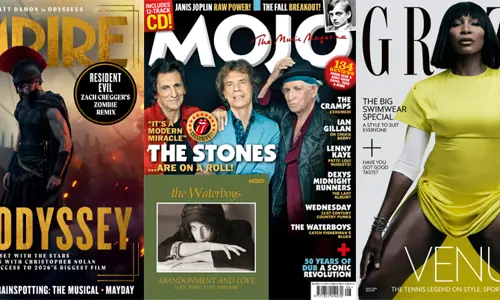
For premium titles like Grazia, Mojo and Empire, growth is increasingly coming not from extending reach but from deepening engagement with existing passionate audiences, as Lauren Holleyoake tells Ciar Byrne.
The printed magazine will be a cherished part of people’s lives for years to come, says Jon Bickley, co-founder and CEO. That is why it’s the key component in Anthem’s publishing strategy.
With the arrival of AI and the widespread availability of unattributable content, specialist publishers need to ensure that their titles are the trusted go-to brands in their sectors, Our Media’s Andy Marshall tells Ciar Byrne.
Stylist’s mission has been clear from day one: to engage with its female audience in an intelligent, positive and non-exploitative way. 16 years on, and current PPA Media Brand of the Year, they are staying true to those values, says Lisa Smosarski.
Gay Times was stuck in a rut, tied to its traditional publishing model and reaching only a small part of the LGBTQ+ community. Under the editorship of Lewis Corner, that began to change, as he explains to Ciar Byrne.
Whatever the rest of 2024 holds, two things are certain. Firstly, the bumpy economic ride will continue. Secondly, the need for media companies to have a broad base of revenue streams has never been more important or more challenging to achieve.
How do you create a specialist consumer media business that is fit for the future? What steps do you need to take to be resilient and flexible as audiences and technology evolve? Carolyn Morgan researched 20 innovators from across Europe to find out.
For many publishers, circulation is all about chasing volume, but they would be much better off chasing profitability, says Natalie Smith, client relationship manager at Warners.
Just how far have US B2Bs gone in reengineering themselves for the 21st century? Limited resources, caution and print-focused attitudes are holding some back. BPA’s Karlene Lukovitz takes soundings from senior publishing execs.
We all dream of cracking the US market. For the Guardian, the high numbers of US visitors to its Guardian Unlimited web site demonstrated a demand for a global news perspective and an awareness of the Guardian brand. The Guardian decided to capitalis
Over the past decade, most publishers have struggled to create a coherent web strategy to complement their print products. Online publisher K9 Media was faced with the opposite problem – how to create a successful print brand to complement its thrivi
Rosemary Smith, director of data protection consultancy Opt-4, uses recent research to challenge publishers about permissioning and assesses the impact of increasing opt-out on the magazine business.
All publishers have access to the data with which to create and track key performance indicators (KPIs). Some don’t bother; some pay lip-service to analysis but don’t invest in the data manipulation skills required to present them properly. Some, lik
Consumer publishers have, for many years, paid lip service to the need to develop subs. Now, faced with increasing pressures at the newsstand, some are regretting not taking action earlier. One title which did act is Time Out and it has enjoyed aston
What direction is your magazine headed and is that direction influenced by an informed understanding of its readership? Only by building a complete picture of your readership can your title hope to evolve in sync with its audience, thereby maintainin
Distributors are central to the success, or otherwise, of your title on the newsstand so it is important to select the right one. Peter Johns provides some tips on what to look out for and points out that, whoever you chose, the relationship will onl
If your magazine has strong brand values, then its readers will probably be open to purchasing other products associated with that brand. This can provide incremental revenues, extra publicity for the brand and extra leverage into retail. But tread c
Whereas the traditional newstrade is full to bursting, the N&S route has huge growth potential. Many publishers have shied away from it in the past, unsure of the precise business model and put off by its perceived complexities. James Evelegh talks t
Licensing (with all the associated production costs) used to be a game only the big publishers could play. The digital revolution has now opened up the field and smaller scale titles are beginning to cash in. Here, Bruce Sawford, provides a checklist
Every subscription publisher knows that their business is based on renewals. Why then do so many practitioners neglect this vital dimension of their business model? Simply put, it's human nature. Here, Chris Gregory lists nineteen different aspects o
Faced with a long term decline in newsstand sales and increasing signs of consumer resistance to price increases, what are US publishers doing to make money? Some are successfully looking at the area of supply management to reduce costs, whilst maint
Publishers’ approach to international fulfilment has made great strides in the past decade and they are demanding more and more from their suppliers. Quadrant Subscription Services (QSS) handles the fulfilment for many prominent domestic publishers a
Asked to define advertising, John E Kennedy, a Canadian policeman-turned copywriter, said it was “salesmanship in print”. It’s a phrase that, Andy Maslen believes, points the way to above-average subs copy. Here, he provides a few pointers on the psy