



NMA: Official Secrets Act Reform Could Criminalise Public Interest Journalism
Sweeping reforms to the Official Secrets Act could criminalise public interest journalism by exposing journalists and whistle blowers to harsh new penalties, says the NMA.
The newspaper business was built for a world where one product served everyone and advertising paid for most of it. That model has gone. What replaces it is still being worked out title by title, from national groups to weeklies covering a single town.
Reader revenue is the clearest shift. Even Reach, which argued for free access for years, now puts some of its journalism behind a paywall, and the regional titles doing best changed their newsrooms before they asked anyone to pay. Ownership keeps changing too. National World rebuilt local editorships after years of centralisation, and the Observer is being reinvented as a premium print and digital title under new owners.
The strongest publishers understand the difference because they are not trying to be everything to everyone. They are trying to be essential to someone.
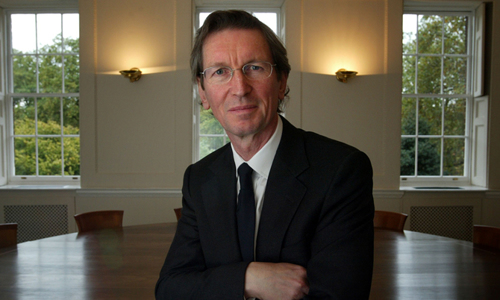
Chris Sherrard News media
Local news is where the pressure shows most. Millions of people now live without a dedicated local title, and new reader-funded and membership startups are moving into the gaps. Platforms are pulling back from news at the same time, which leaves trust and a direct relationship with readers as the assets that matter most.
Print hasn't disappeared either. Well-run weeklies still hold on to their readers, with circulation falling slowly while digital audiences grow.
Below you'll find some of our best feature articles on news media, from reader revenue and newsroom change to ownership, local news and trust, alongside our latest news and industry commentary.
Where is the growth opportunity for today’s publishers? Douglas McCabe tracks how the commercial model has evolved over the past fifty years and examines whether a better understanding of what online audiences want, will help drive future growth.
We asked Chris Sherrard, editor-in-chief of The Irish News, what does best practice publishing look like in news media? This is what he said…
After years of resisting paywalls, Reach is now launching them across its titles. But David Higgerson, Reach’s chief content officer, carefully avoided the word ‘U-turn’ when interviewed by Steve Dyson.
It’s one thing to think that readers should pay for your journalism, but the reality is that unless you improve your offering, then you will struggle to start charging for it, as DC Thomson Editor-in-Chief Frank O’Donnell tells Ciar Byrne.
How can you edit a regional newspaper when you never visit the area you’re writing about? By filling it with generic content, an approach that National World’s David Montgomery, the new owner of JPI Media, is rapidly doing away with.
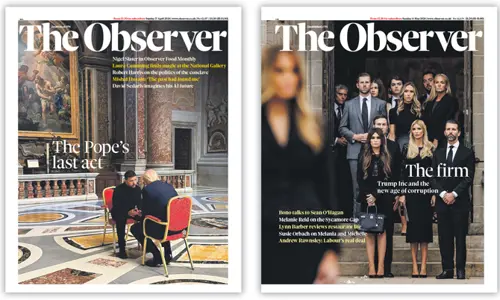
Ray Snoddy talks to Co-CEO Rich Furness about the thinking behind Tortoise Media’s acquisition of the world’s oldest Sunday newspaper and about their plans for its future.
What’s the outlook for national news media in 2024? Christian Broughton, CEO of The Independent, looks ahead.
There is a new generation of entrepreneurs launching local media businesses, bringing with them new ideas on business models and funding. Phil Clark looks at some of the stand-out examples.
With Meta backing away from ‘news’ and AI accelerating the growth of disinformation, we need to redouble our efforts to safeguard access to quality journalism, says News Media Association Chief Executive Owen Meredith.
East Lothian is not just the best place to live – it has the best newsbrand too. Alan Geere heads over the border to find out what’s happening in the world of Scottish weeklies.
Sweeping reforms to the Official Secrets Act could criminalise public interest journalism by exposing journalists and whistle blowers to harsh new penalties, says the NMA.
The Ozone Project, a publisher owned digital advertising platform, has announced the launch of the Ozone Attention Index.
Jane Johnson has been appointed editorial director of The Times and The Sunday Times, and will start this summer.
Total UK marketing budgets expanded for the first time since Q4 2019 and to the sharpest extent since Q1 2019 in the second quarter of 2021, according to the latest IPA Bellwether Report.
Reach has announced plans to expand its Scotland-based operations, announcing a new Scottish Express online edition, the launch of a new Aberdeen Live site and the return of Football Scotland.
The Financial Times and Nikkei will open the first joint bureau in their international editorial network in Houston, Texas, reaching a milestone in their deepening partnership.
The Guardian has appointed Michael Safi and Nosheen Iqbal as the new lead presenters of its flagship daily news podcast, Today in Focus.
According to the Guardian, a massive data leak uncovers global abuse of cyber-surveillance weapon.
The winners of the Press Awards 2020, organised by the Society of Editors, have been announced.
At a recent AOP Crunch event, panellists discussed their strategies for increasing reader revenues.
Racism and how we report it, The Sun’s front page backing for penalty takers, why some terrible crimes get reported more than others, and answering the question, when is it ok to break a manifesto pledge?
The Society of Editors has announced the appointment of Dawn Alford as its new Executive Director.
The Guardian has announced the launch of TechScape, a new flagship technology-focused newsletter authored by Alex Hern, the Guardian’s UK technology editor.
Readly has teamed up with the UK’s largest rail operator to offer commuters, day-trippers and holidaymakers free unlimited digital magazine and newspaper reading.
The Evening Standard yesterday announced the line-up of its new political team, headed by Nicholas Cecil, following the retirement of Joe Murphy.