



Trade Bodies Raise Newspaper Supply Chain Concerns with Minister
The NFRN and ACS have raised concerns about the future of the newspaper supply chain in a joint letter to the Minister of State for Media and Data, John Whittingdale MP.
The newspaper business was built for a world where one product served everyone and advertising paid for most of it. That model has gone. What replaces it is still being worked out title by title, from national groups to weeklies covering a single town.
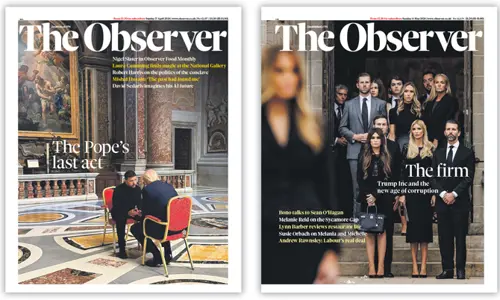
Reader revenue is the clearest shift. Even Reach, which argued for free access for years, now puts some of its journalism behind a paywall, and the regional titles doing best changed their newsrooms before they asked anyone to pay. Ownership keeps changing too. National World rebuilt local editorships after years of centralisation, and the Observer is being reinvented as a premium print and digital title under new owners.
The strongest publishers understand the difference because they are not trying to be everything to everyone. They are trying to be essential to someone.
Chris Sherrard News media
Local news is where the pressure shows most. Millions of people now live without a dedicated local title, and new reader-funded and membership startups are moving into the gaps. Platforms are pulling back from news at the same time, which leaves trust and a direct relationship with readers as the assets that matter most.
Print hasn't disappeared either. Well-run weeklies still hold on to their readers, with circulation falling slowly while digital audiences grow.
Below you'll find some of our best feature articles on news media, from reader revenue and newsroom change to ownership, local news and trust, alongside our latest news and industry commentary.
Where is the growth opportunity for today’s publishers? Douglas McCabe tracks how the commercial model has evolved over the past fifty years and examines whether a better understanding of what online audiences want, will help drive future growth.
We asked Chris Sherrard, editor-in-chief of The Irish News, what does best practice publishing look like in news media? This is what he said…
After years of resisting paywalls, Reach is now launching them across its titles. But David Higgerson, Reach’s chief content officer, carefully avoided the word ‘U-turn’ when interviewed by Steve Dyson.
It’s one thing to think that readers should pay for your journalism, but the reality is that unless you improve your offering, then you will struggle to start charging for it, as DC Thomson Editor-in-Chief Frank O’Donnell tells Ciar Byrne.
How can you edit a regional newspaper when you never visit the area you’re writing about? By filling it with generic content, an approach that National World’s David Montgomery, the new owner of JPI Media, is rapidly doing away with.
Ray Snoddy talks to Co-CEO Rich Furness about the thinking behind Tortoise Media’s acquisition of the world’s oldest Sunday newspaper and about their plans for its future.
What’s the outlook for national news media in 2024? Christian Broughton, CEO of The Independent, looks ahead.
There is a new generation of entrepreneurs launching local media businesses, bringing with them new ideas on business models and funding. Phil Clark looks at some of the stand-out examples.
With Meta backing away from ‘news’ and AI accelerating the growth of disinformation, we need to redouble our efforts to safeguard access to quality journalism, says News Media Association Chief Executive Owen Meredith.
East Lothian is not just the best place to live – it has the best newsbrand too. Alan Geere heads over the border to find out what’s happening in the world of Scottish weeklies.
The NFRN and ACS have raised concerns about the future of the newspaper supply chain in a joint letter to the Minister of State for Media and Data, John Whittingdale MP.
Caerphilly Media, an independent newspaper publisher in south Wales is building a live, searchable, database of every criminal case heard in magistrates courts across England and Wales.
The Society of Editors has joined a new government-backed committee aimed at ensuring the safety of journalists.
The Independent last week published the extraordinary account of Andrew Buncombe, its Chief US Correspondent, who was arrested whilst reporting on the Seattle protests.
The Guardian has announced that it is publishing a black history poster series in the Guardian newspaper documenting key historical moments and the Black Lives Matter movement.
The NFRN has condemned Newsquest for cutting the terms that retailers receive on a number of its publications in the north west of England and north Wales.
On 7 July, an online panel discussed issues relating to ‘Brexit, Boris and the Media’. James Evelegh tuned in…
Staff at Reach have been given details of structural changes to the business and key appointments.
The Society of Editors has praised the stance of the UK Government in announcing a ban on Saudi nationals believed to have been involved in the murder of journalist Jamal Khashoggi.
Reach plc has announced plans to lose around 550 jobs after the coronavirus crisis impacted revenues.
Under its new editor, Emily Sheffield, the Evening Standard has unveiled a new look, including a new masthead and new daily sections.
The Society of Editors (SoE) is to seek clarification over reports that the government is to introduce daily White House-style televised press briefings.
The Sun’s Fabulous brand has unveiled a bold new look, brand new daily pages and new digital products.
Sponsored features highlighting how businesses and employees have responded to the Covid-19 pandemic have been published in newspapers in print and online.
newsawards 2020 was one of the many casualties of the Covid-19 lockdown, but the organisers have announced the winners in those categories where the judging had been completed.