News
Tim Robinson retires after 36 years in regional journalism
Tim Robinson, publisher of the Daily Press Division at Iconic Media, is retiring after a 36-year career in regional journalism.


The newspaper business was built for a world where one product served everyone and advertising paid for most of it. That model has gone. What replaces it is still being worked out title by title, from national groups to weeklies covering a single town.
Reader revenue is the clearest shift. Even Reach, which argued for free access for years, now puts some of its journalism behind a paywall, and the regional titles doing best changed their newsrooms before they asked anyone to pay. Ownership keeps changing too. National World rebuilt local editorships after years of centralisation, and the Observer is being reinvented as a premium print and digital title under new owners.
The strongest publishers understand the difference because they are not trying to be everything to everyone. They are trying to be essential to someone.
Chris Sherrard News media
Local news is where the pressure shows most. Millions of people now live without a dedicated local title, and new reader-funded and membership startups are moving into the gaps. Platforms are pulling back from news at the same time, which leaves trust and a direct relationship with readers as the assets that matter most.
Print hasn't disappeared either. Well-run weeklies still hold on to their readers, with circulation falling slowly while digital audiences grow.
Below you'll find some of our best feature articles on news media, from reader revenue and newsroom change to ownership, local news and trust, alongside our latest news and industry commentary.

Where is the growth opportunity for today’s publishers? Douglas McCabe tracks how the commercial model has evolved over the past fifty years and examines whether a better understanding of what online audiences want, will help drive future growth.

We asked Chris Sherrard, editor-in-chief of The Irish News, what does best practice publishing look like in news media? This is what he said…
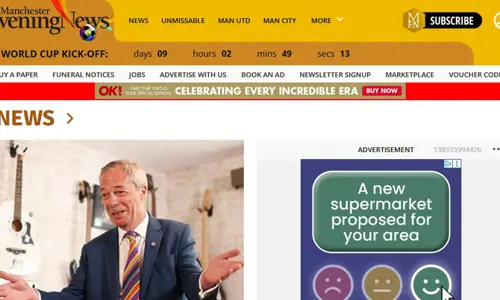
After years of resisting paywalls, Reach is now launching them across its titles. But David Higgerson, Reach’s chief content officer, carefully avoided the word ‘U-turn’ when interviewed by Steve Dyson.

It’s one thing to think that readers should pay for your journalism, but the reality is that unless you improve your offering, then you will struggle to start charging for it, as DC Thomson Editor-in-Chief Frank O’Donnell tells Ciar Byrne.

How can you edit a regional newspaper when you never visit the area you’re writing about? By filling it with generic content, an approach that National World’s David Montgomery, the new owner of JPI Media, is rapidly doing away with.
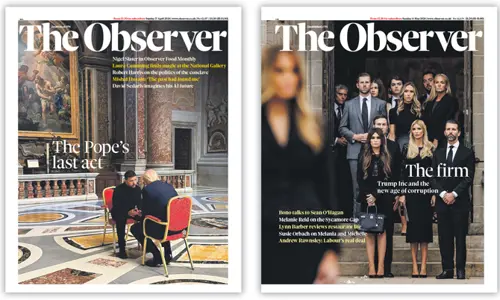
Ray Snoddy talks to Co-CEO Rich Furness about the thinking behind Tortoise Media’s acquisition of the world’s oldest Sunday newspaper and about their plans for its future.

What’s the outlook for national news media in 2024? Christian Broughton, CEO of The Independent, looks ahead.

There is a new generation of entrepreneurs launching local media businesses, bringing with them new ideas on business models and funding. Phil Clark looks at some of the stand-out examples.

With Meta backing away from ‘news’ and AI accelerating the growth of disinformation, we need to redouble our efforts to safeguard access to quality journalism, says News Media Association Chief Executive Owen Meredith.

East Lothian is not just the best place to live – it has the best newsbrand too. Alan Geere heads over the border to find out what’s happening in the world of Scottish weeklies.

Tim Robinson, publisher of the Daily Press Division at Iconic Media, is retiring after a 36-year career in regional journalism.

Adnami has unveiled its Agentic Curation product, enhancing media buying for the attention era.

White paper finds that ad networks are working hard to clean up the supply path and focusing on quality rather than quantity to deliver better outcomes.

It feels appropriate that the title for the last AOP CRUNCH of 2025 was a question. Despite curation being second only to AI in this year’s industry discourse, much of how it works, whether it works, and who benefits remains unanswered.

WAN-IFRA and FIPP have announced they are to merge, creating a global alliance for publishers.

Last week Reach announced the charity campaigns some of its newsbrands will be supporting this holiday season, across local and national titles.

Daily Mail has announced it has teamed up with Alzheimer’s Society to tackle the UK’s biggest killer – dementia.

The multiyear, philanthropically funded project brings new attention to the people and communities organizing to protect fundamental rights.

The suit opposes an unconstitutional new press policy, which was designed to undermine the type of independent journalism protected by the First Amendment.

Seven apprentices have joined Reach through a journalism initiative with The King’s Trust.

Chris Cook, a senior reporter at the FT, has long been aware of computers’ potential as an investigative aid. And, as he tells Ray Snoddy, that potential has been turbocharged by the widespread adoption of AI.

Puzzles is an important driver of subscription revenues, so not something to be taken lightly. As Telegraph Puzzles celebrates its centenary, Meg Carter talks to James Brydon about how the offering has evolved and how it stays relevant.

Headlines need to grab people’s attention but if the story doesn’t deliver on the promise, then the reputational damage can be considerable. Peter Sands looks at how the craft of headline writing is evolving.

Richard Reeves, managing director of the Association of Online Publishers (AOP), outlines why there is reason to be positive about the future and how prioritising unique connections with audiences will drive a new, strengthened era for publishers.

Welcome to our first e-commerce special. Having four or five viable revenue streams is the key to achieving long-term profitability, and for many publishers, e-commerce is now one of those streams.
