News
Square Up Media launches new digital platform – Foodism
Square Up Media has announced the launch of its fourth platform – a website and weekly newsletter devoted to exploring food trends, bars and restaurants around the world.


The newspaper business was built for a world where one product served everyone and advertising paid for most of it. That model has gone. What replaces it is still being worked out title by title, from national groups to weeklies covering a single town.
Reader revenue is the clearest shift. Even Reach, which argued for free access for years, now puts some of its journalism behind a paywall, and the regional titles doing best changed their newsrooms before they asked anyone to pay. Ownership keeps changing too. National World rebuilt local editorships after years of centralisation, and the Observer is being reinvented as a premium print and digital title under new owners.
The strongest publishers understand the difference because they are not trying to be everything to everyone. They are trying to be essential to someone.
Chris Sherrard News media
Local news is where the pressure shows most. Millions of people now live without a dedicated local title, and new reader-funded and membership startups are moving into the gaps. Platforms are pulling back from news at the same time, which leaves trust and a direct relationship with readers as the assets that matter most.
Print hasn't disappeared either. Well-run weeklies still hold on to their readers, with circulation falling slowly while digital audiences grow.
Below you'll find some of our best feature articles on news media, from reader revenue and newsroom change to ownership, local news and trust, alongside our latest news and industry commentary.

Where is the growth opportunity for today’s publishers? Douglas McCabe tracks how the commercial model has evolved over the past fifty years and examines whether a better understanding of what online audiences want, will help drive future growth.

We asked Chris Sherrard, editor-in-chief of The Irish News, what does best practice publishing look like in news media? This is what he said…
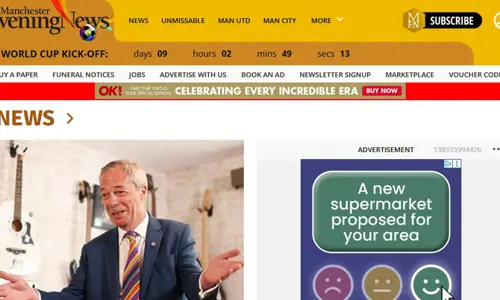
After years of resisting paywalls, Reach is now launching them across its titles. But David Higgerson, Reach’s chief content officer, carefully avoided the word ‘U-turn’ when interviewed by Steve Dyson.
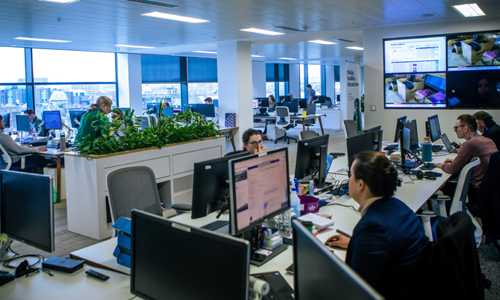
It’s one thing to think that readers should pay for your journalism, but the reality is that unless you improve your offering, then you will struggle to start charging for it, as DC Thomson Editor-in-Chief Frank O’Donnell tells Ciar Byrne.

How can you edit a regional newspaper when you never visit the area you’re writing about? By filling it with generic content, an approach that National World’s David Montgomery, the new owner of JPI Media, is rapidly doing away with.
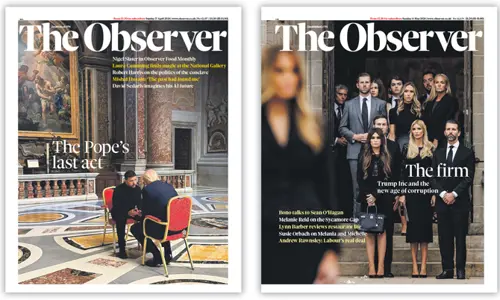
Ray Snoddy talks to Co-CEO Rich Furness about the thinking behind Tortoise Media’s acquisition of the world’s oldest Sunday newspaper and about their plans for its future.

What’s the outlook for national news media in 2024? Christian Broughton, CEO of The Independent, looks ahead.

There is a new generation of entrepreneurs launching local media businesses, bringing with them new ideas on business models and funding. Phil Clark looks at some of the stand-out examples.

With Meta backing away from ‘news’ and AI accelerating the growth of disinformation, we need to redouble our efforts to safeguard access to quality journalism, says News Media Association Chief Executive Owen Meredith.
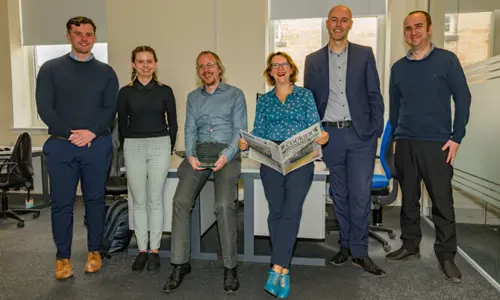
East Lothian is not just the best place to live – it has the best newsbrand too. Alan Geere heads over the border to find out what’s happening in the world of Scottish weeklies.

Square Up Media has announced the launch of its fourth platform – a website and weekly newsletter devoted to exploring food trends, bars and restaurants around the world.

The Financial Times has appointed Patrick Jenkins as financial editor and assistant editor from 1 January 2014.

Newsworks has announced the winners of its inaugural planning awards, chosen by a jury of 16 client and agency judges led by Marc Mathieu, senior vice-president of marketing at Unilever.

More than a hundred prominent people from literature, the arts, science, academia, human rights and the law have joined with Hacked Off to launch a Declaration in support of the Royal Charter on press self-regulation.

Sheffield Newspapers has given local newsagents some early festive cheer by announcing price increases on six of its weekly titles, all of which are accompanied by pro rata terms.

Informa plc is donating over £54,000 to help with the relief effort following the devastating impact of Typhoon Haiyan on areas of the Philippines.

Aston Barclay has become the first vehicle remarketing company to feature Deltapoint’s market intelligence data provided by Auto Trader on its auction view.

InPublishing celebrated its tenth birthday in November 2013, by asking some leading figures in the publishing world to try to predict what different sectors of the industry would look like in ten year’s time.

Local and regional newspapers can still provide careers for would-be journalists, according to today’s editors. In the second of a two-part survey, Steve Dyson collects their thoughts and advice on the industry’s future.

The lethal combination of cost cutting and the need for speed in the online publishing world has led to the imminent demise of the sub-editor. Yet, writes Anthony Longden, the sub-editor’s role must be saved, and it’s not too late to do so.

In August, The Sun put up a paywall around its website, with the launch of Sun+. Unsurprisingly, site traffic plummeted, but will the new content package on offer entice enough Sun readers to open their wallets? Ciar Byrne joined the early subscriber

The stupendous global traffic to the Mail and Guardian websites is opening up international opportunities for both publishers. But, asks Peter Preston, is there a danger of their global success diluting their relevance to audiences closer to home?

Compare the job description of anyone in the publishing sector today, with the corresponding job description for the same role, ten years ago, and the degree of change is breathtaking. Neil Jagger, Group Newspaper Sales and Marketing Director of Trin

When Google announced in March that it was “sunsetting” its RSS newsreader service Google Reader, writes Robert Andrews, echoes rang out from hundreds of aghast journalists’ jaws hitting the floor.

This year’s survey, carried out in July and August by AOP’s Head of Research and Insight, Tim Cain, shows publishers increasingly looking to drive value from data for both content and commercial models.
