News
PCC publishes annual review
The PCC has published its annual review of 2010.


The newspaper business was built for a world where one product served everyone and advertising paid for most of it. That model has gone. What replaces it is still being worked out title by title, from national groups to weeklies covering a single town.
Reader revenue is the clearest shift. Even Reach, which argued for free access for years, now puts some of its journalism behind a paywall, and the regional titles doing best changed their newsrooms before they asked anyone to pay. Ownership keeps changing too. National World rebuilt local editorships after years of centralisation, and the Observer is being reinvented as a premium print and digital title under new owners.
The strongest publishers understand the difference because they are not trying to be everything to everyone. They are trying to be essential to someone.
Chris Sherrard News media
Local news is where the pressure shows most. Millions of people now live without a dedicated local title, and new reader-funded and membership startups are moving into the gaps. Platforms are pulling back from news at the same time, which leaves trust and a direct relationship with readers as the assets that matter most.
Print hasn't disappeared either. Well-run weeklies still hold on to their readers, with circulation falling slowly while digital audiences grow.
Below you'll find some of our best feature articles on news media, from reader revenue and newsroom change to ownership, local news and trust, alongside our latest news and industry commentary.

Where is the growth opportunity for today’s publishers? Douglas McCabe tracks how the commercial model has evolved over the past fifty years and examines whether a better understanding of what online audiences want, will help drive future growth.

We asked Chris Sherrard, editor-in-chief of The Irish News, what does best practice publishing look like in news media? This is what he said…

After years of resisting paywalls, Reach is now launching them across its titles. But David Higgerson, Reach’s chief content officer, carefully avoided the word ‘U-turn’ when interviewed by Steve Dyson.

It’s one thing to think that readers should pay for your journalism, but the reality is that unless you improve your offering, then you will struggle to start charging for it, as DC Thomson Editor-in-Chief Frank O’Donnell tells Ciar Byrne.

How can you edit a regional newspaper when you never visit the area you’re writing about? By filling it with generic content, an approach that National World’s David Montgomery, the new owner of JPI Media, is rapidly doing away with.
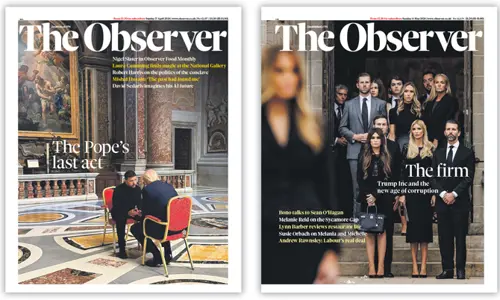
Ray Snoddy talks to Co-CEO Rich Furness about the thinking behind Tortoise Media’s acquisition of the world’s oldest Sunday newspaper and about their plans for its future.

What’s the outlook for national news media in 2024? Christian Broughton, CEO of The Independent, looks ahead.

There is a new generation of entrepreneurs launching local media businesses, bringing with them new ideas on business models and funding. Phil Clark looks at some of the stand-out examples.

With Meta backing away from ‘news’ and AI accelerating the growth of disinformation, we need to redouble our efforts to safeguard access to quality journalism, says News Media Association Chief Executive Owen Meredith.

East Lothian is not just the best place to live – it has the best newsbrand too. Alan Geere heads over the border to find out what’s happening in the world of Scottish weeklies.

The PCC has published its annual review of 2010.

Quark has announced that it is sponsoring the Digital Magazine Awards 2011; an international accolade showcasing the best magazines, standout advertisements and most influential people from the digital publishing industry.

Digital publishing company YUDU Media has announced the results from the company’s research into users’ interaction with Reader Apps for the iPad and iPhone.

Newspaper companies looking for new investment strategies and revenue streams can learn much from the industry leaders who have already joined the programme for the 2011 World Newspaper Congress to be held in Vienna, Austria, next October.

Is your email marketing done on an occasional campaign by campaign basis, or is it hardwired into your day-to-day database and website activities? The secret of successful email marketing, writes Mark Edwards, is to integrate it into your operations,

A clearly defined, focused and well communicated strategy can make all the difference to a company’s long term success. So why is it, asks Howard Scott, that so many company strategies are rambling, vague and known only to a select few?

Despite the fact that the iPad has been on the market for over a year and that millions of advertising dollars have already been spent in iPad magazines – the truth is, writes Rupert Turnbull, we are still really in beta mode.

Consumer magazine apps, writes Karlene Lukovitz, aren’t even in their toddler stage yet, although the media’s dissection of every move in this arena sometimes makes it feel like it’s been eons.

How can specialist publishers get the attention of larger advertisers? They lack the big circulation numbers of large magazines, but what they do have, writes Carolyn Morgan, is expert editorial, intensely strong communities and the flexibility to cr

It is obvious that consumers are becoming more “techno savvy” in using electronic channels to manage their media consumption. Yet is the market actually moving as quickly as many commentators suggest? And what hints are we getting about the magazine

The million dollar question is, will apps make profits for publishers? The answer to that question lies not only in getting the key editorial and production decisions right, but also, crucially, in the intelligent and integrated marketing and fulfilm

With all the buzz surrounding social media and tablets, you might be forgiven for thinking email marketing a bit passé. Yet, publishers continue to churn out enormous and increasing amounts of email, so it looks set to remain a centrepiece of our mar

The recently published AOP Organisation Survey shows that publishers are bullish about prospects for the industry in 2011/12. Tim Cain looks at the main findings of the research.

The ramifications of the monthly ABC figures stretch far beyond the circulation department and affect the mood and sense of well-being across the whole company. In recent times, these figures have given little cause for celebration, yet there is good

In their headlong rush to slash costs, are newspaper publishers in danger of throwing out the baby with the bath water? Jim Chisholm thinks so.
