FEATURE
ACAP: the future of online publishing
Dominic Young looks at how ACAP, a new way of communicating rights and permissions online, aims to create new opportunities for publishers, search engines and users on the internet.


The newspaper business was built for a world where one product served everyone and advertising paid for most of it. That model has gone. What replaces it is still being worked out title by title, from national groups to weeklies covering a single town.
Reader revenue is the clearest shift. Even Reach, which argued for free access for years, now puts some of its journalism behind a paywall, and the regional titles doing best changed their newsrooms before they asked anyone to pay. Ownership keeps changing too. National World rebuilt local editorships after years of centralisation, and the Observer is being reinvented as a premium print and digital title under new owners.
The strongest publishers understand the difference because they are not trying to be everything to everyone. They are trying to be essential to someone.
Chris Sherrard News media
Local news is where the pressure shows most. Millions of people now live without a dedicated local title, and new reader-funded and membership startups are moving into the gaps. Platforms are pulling back from news at the same time, which leaves trust and a direct relationship with readers as the assets that matter most.
Print hasn't disappeared either. Well-run weeklies still hold on to their readers, with circulation falling slowly while digital audiences grow.
Below you'll find some of our best feature articles on news media, from reader revenue and newsroom change to ownership, local news and trust, alongside our latest news and industry commentary.

Where is the growth opportunity for today’s publishers? Douglas McCabe tracks how the commercial model has evolved over the past fifty years and examines whether a better understanding of what online audiences want, will help drive future growth.

We asked Chris Sherrard, editor-in-chief of The Irish News, what does best practice publishing look like in news media? This is what he said…

After years of resisting paywalls, Reach is now launching them across its titles. But David Higgerson, Reach’s chief content officer, carefully avoided the word ‘U-turn’ when interviewed by Steve Dyson.
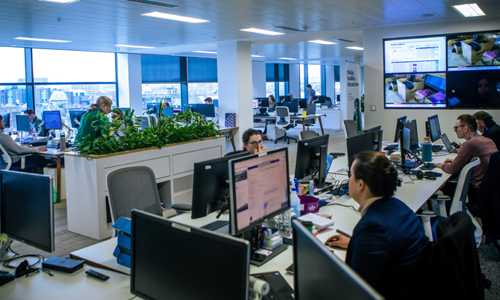
It’s one thing to think that readers should pay for your journalism, but the reality is that unless you improve your offering, then you will struggle to start charging for it, as DC Thomson Editor-in-Chief Frank O’Donnell tells Ciar Byrne.

How can you edit a regional newspaper when you never visit the area you’re writing about? By filling it with generic content, an approach that National World’s David Montgomery, the new owner of JPI Media, is rapidly doing away with.
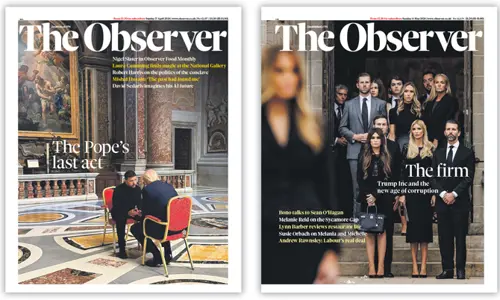
Ray Snoddy talks to Co-CEO Rich Furness about the thinking behind Tortoise Media’s acquisition of the world’s oldest Sunday newspaper and about their plans for its future.

What’s the outlook for national news media in 2024? Christian Broughton, CEO of The Independent, looks ahead.

There is a new generation of entrepreneurs launching local media businesses, bringing with them new ideas on business models and funding. Phil Clark looks at some of the stand-out examples.

With Meta backing away from ‘news’ and AI accelerating the growth of disinformation, we need to redouble our efforts to safeguard access to quality journalism, says News Media Association Chief Executive Owen Meredith.
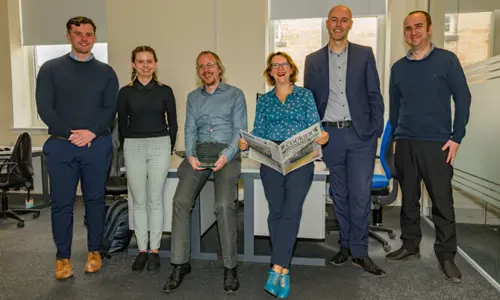
East Lothian is not just the best place to live – it has the best newsbrand too. Alan Geere heads over the border to find out what’s happening in the world of Scottish weeklies.

Dominic Young looks at how ACAP, a new way of communicating rights and permissions online, aims to create new opportunities for publishers, search engines and users on the internet.

Ever since the internet was first identified as one of the contributory factors in newspaper circulation decline, publishers and advertisers have been obsessing over measurement issues; in particular the search for a single measure of a newspaper’s o

Some traditional publishers are now producing online content every bit as compelling, innovative and interactive as their pure player competitors. Some are not. For many, what is holding them back, says Craig Hanna, is their unwillingness to embrace

The impact of the new free distribution model on newspaper sales has been much analysed. What has perhaps got less attention is the impact Metro et al will have on their free cousins in the door to door sector. Steven Malcolm assesses the implication

The Telegraph’s move to its shiny new newsroom at Victoria continues to attract much comment, some of it one-sided and not entirely positive. Ray Snoddy met with Telegraph editor Will Lewis to hear his side of the story.

With circulations in decline, publishers have been experimenting with a range of new strategies – from multi-platform publishing to free distribution models. Many have also been looking at the potential for newspaper sales outside of the traditional

After recent acquisitions, Iliffe News & Media (INML) moved into the top 10 list of regional publishers. Russell Borthwick met with three of Iliffe’s top executives (chief executive, David Fordham, Andy Gough, MD of Cambridge Newspapers, and newly ap

In the print world, the key measures of circulation and readership are firmly established and widely understood. Not so with online, where there is a multitude of different definitions of what constitutes web traffic as well as systems for measuring

If there's one figure who has become 'Mr Digital' in the UK print media, it's Simon Waldman. Group director of digital strategy and development at Guardian Media Group, he also took over the chair of the Association of Online Publishers in September

As a key component of new internet capabilities, podcasting offers huge potential to publishers of all sizes. Alex Manchester explains why you should be looking to start.

Web 1.0 was all about the publisher; Web 2.0 is all about the user. It’s about enabling the user to create content and to network with other members of the community. The challenge for publishers is to shed their proprietorial approach to content and

On 23 November 2006, the Specialised Information Publishers Association (SIPA) held a conference looking at Web 2.0 at the Novotel, Tower Bridge. James Evelegh looks at some of the main themes coming out of the day.

While most publishers continue to invest heavily in search engine optimisation, to drive search engine traffic to their sites, some have started to have serious misgivings about what they see as copyright infringements and unfair competition. Andrea

The time to stop and think is too often treated as a luxury, especially in busy circulation departments. Yet, every now and then, it is essential to pause and look afresh at the way you do things. Northcliffe asked Deloitte to assist them in a review

The regional press’ trump card is its local ties – both with readers and advertisers. Archant Norfolk is about to launch a new scheme which aims to strengthen this bond still further – and hopefully make money too. Philip Preston explains their think
