FEATURE
Writing for the web: old wine in new bottles?
Writing copy for the web – or emails – is a completely new discipline. Or is it? Andy Maslen looks at a few basic truths for digital copywriting.


The newspaper business was built for a world where one product served everyone and advertising paid for most of it. That model has gone. What replaces it is still being worked out title by title, from national groups to weeklies covering a single town.
Reader revenue is the clearest shift. Even Reach, which argued for free access for years, now puts some of its journalism behind a paywall, and the regional titles doing best changed their newsrooms before they asked anyone to pay. Ownership keeps changing too. National World rebuilt local editorships after years of centralisation, and the Observer is being reinvented as a premium print and digital title under new owners.
The strongest publishers understand the difference because they are not trying to be everything to everyone. They are trying to be essential to someone.
Chris Sherrard News media
Local news is where the pressure shows most. Millions of people now live without a dedicated local title, and new reader-funded and membership startups are moving into the gaps. Platforms are pulling back from news at the same time, which leaves trust and a direct relationship with readers as the assets that matter most.
Print hasn't disappeared either. Well-run weeklies still hold on to their readers, with circulation falling slowly while digital audiences grow.
Below you'll find some of our best feature articles on news media, from reader revenue and newsroom change to ownership, local news and trust, alongside our latest news and industry commentary.

Where is the growth opportunity for today’s publishers? Douglas McCabe tracks how the commercial model has evolved over the past fifty years and examines whether a better understanding of what online audiences want, will help drive future growth.

We asked Chris Sherrard, editor-in-chief of The Irish News, what does best practice publishing look like in news media? This is what he said…
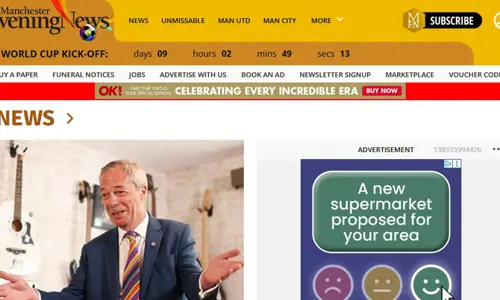
After years of resisting paywalls, Reach is now launching them across its titles. But David Higgerson, Reach’s chief content officer, carefully avoided the word ‘U-turn’ when interviewed by Steve Dyson.
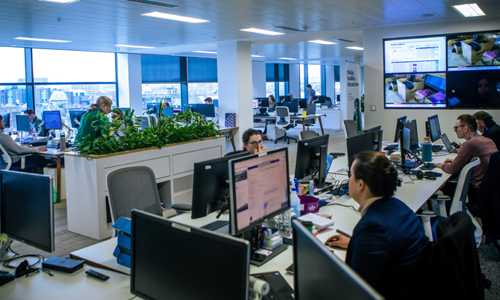
It’s one thing to think that readers should pay for your journalism, but the reality is that unless you improve your offering, then you will struggle to start charging for it, as DC Thomson Editor-in-Chief Frank O’Donnell tells Ciar Byrne.

How can you edit a regional newspaper when you never visit the area you’re writing about? By filling it with generic content, an approach that National World’s David Montgomery, the new owner of JPI Media, is rapidly doing away with.
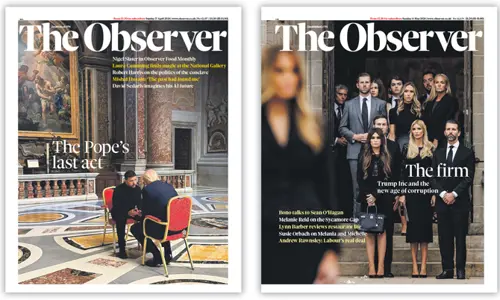
Ray Snoddy talks to Co-CEO Rich Furness about the thinking behind Tortoise Media’s acquisition of the world’s oldest Sunday newspaper and about their plans for its future.

What’s the outlook for national news media in 2024? Christian Broughton, CEO of The Independent, looks ahead.
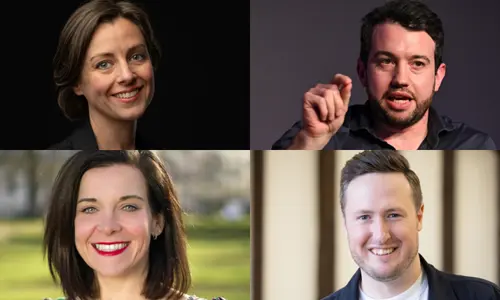
There is a new generation of entrepreneurs launching local media businesses, bringing with them new ideas on business models and funding. Phil Clark looks at some of the stand-out examples.

With Meta backing away from ‘news’ and AI accelerating the growth of disinformation, we need to redouble our efforts to safeguard access to quality journalism, says News Media Association Chief Executive Owen Meredith.
East Lothian is not just the best place to live – it has the best newsbrand too. Alan Geere heads over the border to find out what’s happening in the world of Scottish weeklies.

Writing copy for the web – or emails – is a completely new discipline. Or is it? Andy Maslen looks at a few basic truths for digital copywriting.

Last autumn saw a covermount frenzy in the national press with publishers falling over themselves to tempt floating readers with free CDs and DVDs. Yet, many in the industry, not least the proprietors themselves, are openly questioning their value. D

Each issue, Alan Geere casts an eye over the performance of the national press.

The UK evening press market has had a torrid time of late – yet some titles have managed to increase sales, whilst some others have at least shed readers at a less alarming rate than most. The Norwich Evening News’ Philip Preston recently undertook r

Newspaper owners are feeling the heat. The emergence of paid for search and the aggressive intrusion by Google & co into our markets is causing great unease in newspaper boardrooms. Yet, says Tony Coad, it is too early to throw in the towel, but what

The words ‘reader research’ and ‘brand awareness’ can make some editors a little defensive – especially when they come accompanied by a long list of all that is wrong with the paper. Yet, without the editor onboard, branding projects are doomed to fa

While specialist titles blazed a trail online, most general interest titles lagged behind in terms of online development. They are now catching up, nurturing online communities, refining their business models and are increasingly aware that the compe

Sales promotion has come a long way since the days when the answer to everything was ‘bingo’ and space on the front page could only be secured over the editor’s dead body. Russell Borthwick tracks the changes in this fast changing and increasingly hi

Do your journalists ever talk to your marketers? Indeed, are they even in the same building? A close working relationship can, says Austen Dack, have a dramatic and measurable effect on newspaper sales.

The 12th of September 2005 saw the long awaited and heavily hyped relaunch of the Guardian in its new Berliner format. Tony Coad talks with senior managers at the Guardian to get their inside view.

Each issue, Alan Geere casts an eye over the performance of the national press.

Most of the nationals are now taking the internet very seriously indeed and are offering mixed packages of free and paid-for content and a variety of different online delivery methods. Andrea Kirkby assesses the state of play.

The leaflet business has long been a mainstay of the free newspaper sector, and yet, ever increasing leaflet bookings are resulting in decreased response. Unless publishers can come up with a solution to the resulting ‘clutter’, then clients might st

At this year’s Newspaper Society Awards, the Evening Gazette won the prestigious Sales Promotion of the Year award – for the second year running. It’s “smaller size, bigger picture” campaign, promoting the paper’s switch to compact, was a superbly cr

UK NEPA held its 11th annual conference on 12 July at the Millennium Gloucester Hotel. It was a lively day, including round table discussions, panel discussions and presentations. James Evelegh went along to listen and here, reviews the presentation
