News
Guardian US launches City Champions
Guardian US is launching a new special project which will report on inspiring people, groups and grassroots initiatives that are transforming lives in cities across the US.


The newspaper business was built for a world where one product served everyone and advertising paid for most of it. That model has gone. What replaces it is still being worked out title by title, from national groups to weeklies covering a single town.
Reader revenue is the clearest shift. Even Reach, which argued for free access for years, now puts some of its journalism behind a paywall, and the regional titles doing best changed their newsrooms before they asked anyone to pay. Ownership keeps changing too. National World rebuilt local editorships after years of centralisation, and the Observer is being reinvented as a premium print and digital title under new owners.
The strongest publishers understand the difference because they are not trying to be everything to everyone. They are trying to be essential to someone.
Chris Sherrard News media
Local news is where the pressure shows most. Millions of people now live without a dedicated local title, and new reader-funded and membership startups are moving into the gaps. Platforms are pulling back from news at the same time, which leaves trust and a direct relationship with readers as the assets that matter most.
Print hasn't disappeared either. Well-run weeklies still hold on to their readers, with circulation falling slowly while digital audiences grow.
Below you'll find some of our best feature articles on news media, from reader revenue and newsroom change to ownership, local news and trust, alongside our latest news and industry commentary.

Where is the growth opportunity for today’s publishers? Douglas McCabe tracks how the commercial model has evolved over the past fifty years and examines whether a better understanding of what online audiences want, will help drive future growth.

We asked Chris Sherrard, editor-in-chief of The Irish News, what does best practice publishing look like in news media? This is what he said…
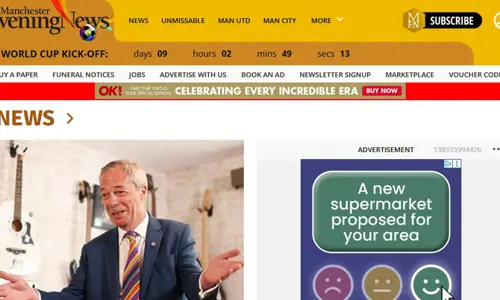
After years of resisting paywalls, Reach is now launching them across its titles. But David Higgerson, Reach’s chief content officer, carefully avoided the word ‘U-turn’ when interviewed by Steve Dyson.
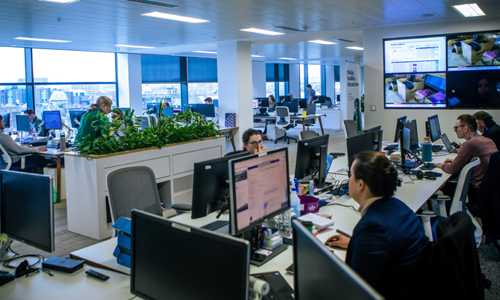
It’s one thing to think that readers should pay for your journalism, but the reality is that unless you improve your offering, then you will struggle to start charging for it, as DC Thomson Editor-in-Chief Frank O’Donnell tells Ciar Byrne.

How can you edit a regional newspaper when you never visit the area you’re writing about? By filling it with generic content, an approach that National World’s David Montgomery, the new owner of JPI Media, is rapidly doing away with.
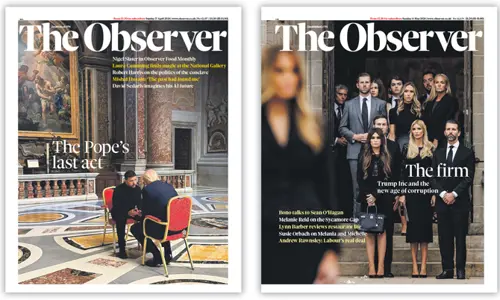
Ray Snoddy talks to Co-CEO Rich Furness about the thinking behind Tortoise Media’s acquisition of the world’s oldest Sunday newspaper and about their plans for its future.
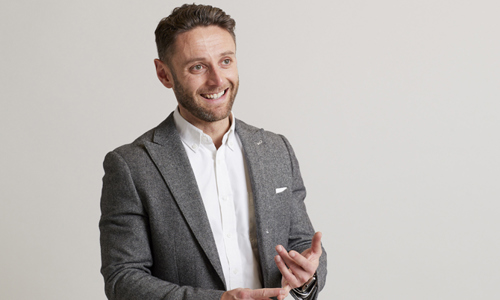
What’s the outlook for national news media in 2024? Christian Broughton, CEO of The Independent, looks ahead.

There is a new generation of entrepreneurs launching local media businesses, bringing with them new ideas on business models and funding. Phil Clark looks at some of the stand-out examples.

With Meta backing away from ‘news’ and AI accelerating the growth of disinformation, we need to redouble our efforts to safeguard access to quality journalism, says News Media Association Chief Executive Owen Meredith.
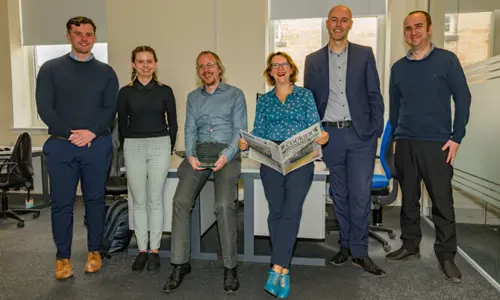
East Lothian is not just the best place to live – it has the best newsbrand too. Alan Geere heads over the border to find out what’s happening in the world of Scottish weeklies.

Guardian US is launching a new special project which will report on inspiring people, groups and grassroots initiatives that are transforming lives in cities across the US.

Journalists are under pressure to produce lots of great content, but find themselves spending too much time on repetitive, non-creative tasks. Help is at hand, says Sprylab’s Esra Celebi: let Artificial Intelligence take the strain.

The Society of Editors has condemned what appears to be a concerted effort by the Liberal Democrats to mislead readers and voters by disguising their election freesheet as imitation local newspapers.

The continued rise of Media Labs is the focus of the latest 2019 Trends in Newsrooms report.

How many systems do you use across your business? Lots? In which case, you’ll not be benefiting from cost savings, better intel, automation, security and GDPR compliance. As Affino’s Markus Karlsson and Jonathan Collins tell us, less can be more…

The Jewish Chronicle has a circulation of just over 20,000 but, as the voice of the UK’s Jewish community since 1841, its voice carries far. Ray Snoddy talks to editor Stephen Pollard about the challenges he faces, both political and publishing.

A year of political turmoil, but what happened in the publishing world? James Evelegh picks four things that stood out for him.

With a rising tide of online disinformation, trivia and trolling, the dedicated email newsletter is being seen in a new light. The key to formulating the right newsletter strategy is to focus on quality and relevance (and not forgetting, metrics).

Staff numbers have more than halved since 2008 at Isle of Man Newspapers, while copy sales are down 40%. But editor Richard Butt remains one of the UK’s most positive journalists. Steve Dyson finds out why.

Are some regional newspapers getting their news values in a twist? Posting stories with little or no news value just to chase clicks or commercial revenues, makes Jon Griffin wonder what has become of the industry he entered over 40 years ago.

With digital upheaval, the publishing industry is smaller than it once was, but is still “massive”. Furthermore, writes Jim Bilton, there are pockets of growth.

Guardian Labs is working with Visa on a campaign spanning the Guardian’s complete advertising portfolio, as part of Visa’s message to inspire people to shop locally this Christmas.

Digital publishing revenues declined to £113.1m in Q2 2019, a 3.7% fall in comparison to Q2 2018, according to the latest Digital Publishers Revenue Index (DPRI).

At our recent webinar on editorial productivity, NFU’s Paul Bradley explained how changes they had made to their work processes had had a transformative effect on the team.

IAB Europe this week announced the public launch of its Consent Management Platform (CMP) Validator Tool and the results of its first round of tests for registered CMPs on its Transparency & Consent Framework (TCF).
