News
The Guardian wins libel case
The Guardian has welcomed Friday's High Court dismissal of Noel Clark's libel claim against the newspaper.


The newspaper business was built for a world where one product served everyone and advertising paid for most of it. That model has gone. What replaces it is still being worked out title by title, from national groups to weeklies covering a single town.
Reader revenue is the clearest shift. Even Reach, which argued for free access for years, now puts some of its journalism behind a paywall, and the regional titles doing best changed their newsrooms before they asked anyone to pay. Ownership keeps changing too. National World rebuilt local editorships after years of centralisation, and the Observer is being reinvented as a premium print and digital title under new owners.
The strongest publishers understand the difference because they are not trying to be everything to everyone. They are trying to be essential to someone.
Chris Sherrard News media
Local news is where the pressure shows most. Millions of people now live without a dedicated local title, and new reader-funded and membership startups are moving into the gaps. Platforms are pulling back from news at the same time, which leaves trust and a direct relationship with readers as the assets that matter most.
Print hasn't disappeared either. Well-run weeklies still hold on to their readers, with circulation falling slowly while digital audiences grow.
Below you'll find some of our best feature articles on news media, from reader revenue and newsroom change to ownership, local news and trust, alongside our latest news and industry commentary.

Where is the growth opportunity for today’s publishers? Douglas McCabe tracks how the commercial model has evolved over the past fifty years and examines whether a better understanding of what online audiences want, will help drive future growth.

We asked Chris Sherrard, editor-in-chief of The Irish News, what does best practice publishing look like in news media? This is what he said…
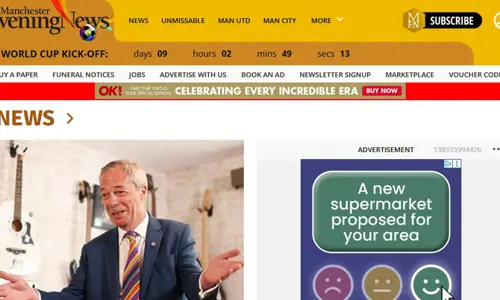
After years of resisting paywalls, Reach is now launching them across its titles. But David Higgerson, Reach’s chief content officer, carefully avoided the word ‘U-turn’ when interviewed by Steve Dyson.
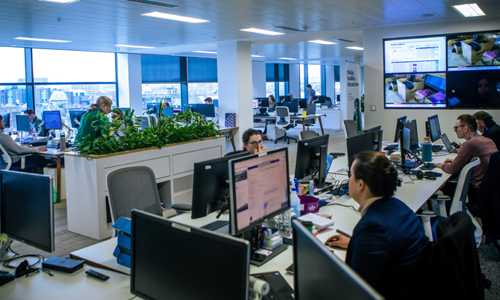
It’s one thing to think that readers should pay for your journalism, but the reality is that unless you improve your offering, then you will struggle to start charging for it, as DC Thomson Editor-in-Chief Frank O’Donnell tells Ciar Byrne.
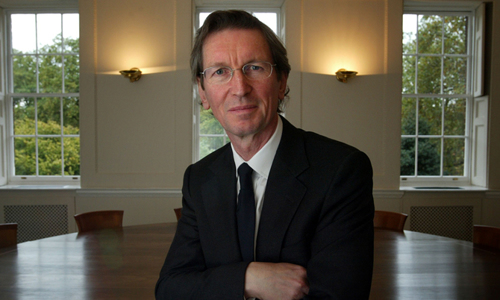
How can you edit a regional newspaper when you never visit the area you’re writing about? By filling it with generic content, an approach that National World’s David Montgomery, the new owner of JPI Media, is rapidly doing away with.
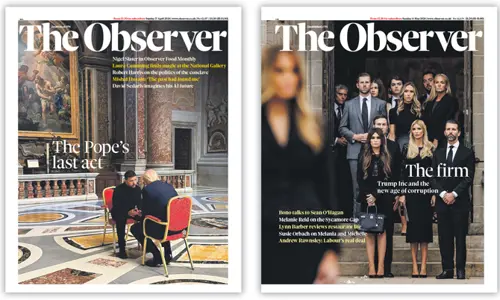
Ray Snoddy talks to Co-CEO Rich Furness about the thinking behind Tortoise Media’s acquisition of the world’s oldest Sunday newspaper and about their plans for its future.
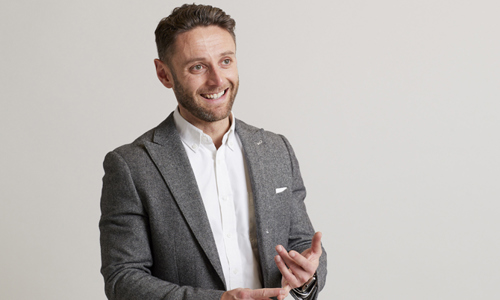
What’s the outlook for national news media in 2024? Christian Broughton, CEO of The Independent, looks ahead.

There is a new generation of entrepreneurs launching local media businesses, bringing with them new ideas on business models and funding. Phil Clark looks at some of the stand-out examples.

With Meta backing away from ‘news’ and AI accelerating the growth of disinformation, we need to redouble our efforts to safeguard access to quality journalism, says News Media Association Chief Executive Owen Meredith.
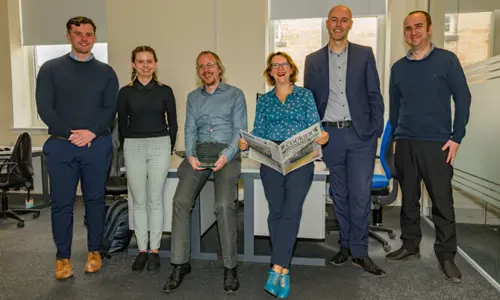
East Lothian is not just the best place to live – it has the best newsbrand too. Alan Geere heads over the border to find out what’s happening in the world of Scottish weeklies.

The Guardian has welcomed Friday's High Court dismissal of Noel Clark's libel claim against the newspaper.

Can UK media be future-proofed and survive the challenges and opportunities of AI, the reliance of a generation on social for its news, and a perception that journalism is not reflecting, or representative of, the population it serves?
Ray Snoddy talks to Co-CEO Rich Furness about the thinking behind Tortoise Media’s acquisition of the world’s oldest Sunday newspaper and about their plans for its future.
East Lothian is not just the best place to live – it has the best newsbrand too. Alan Geere heads over the border to find out what’s happening in the world of Scottish weeklies.

For many publishers, the website is the linchpin of their digital operations. But, writes John Barnes, it might be time to reimagine its role.

This stems from changing platform strategies and the emergence of AI as a source of news, according to the 2025 Reuters Institute Digital News Report. Nic Newman picks out the main takeaways from the report.

Phil Clark looks at how analysing each piece of content by the specific user need that it meets can help refine your content strategy and increase traffic, audience loyalty and conversions.

Print is no longer the default. It’s the premium format. It has presence, weight, and staying power, says Mike Hoy, CEO of Papermule.

Despite seeing digital as the principal route to market for its newspapers, Iliffe Media still sees a long future for print, says Ian Carter, chief operating officer.

The two main areas where attention should be focused on are paper & inks and energy, says Steven Renders, general manager of Roularta Printing.

A unified editorial process reduces admin overhead from a set up and support perspective, says James Hirsz, project manager at Atex.

There is a world of potential readers beyond the newsstand and with the right plan and distribution partner, they are reachable, says Chris Horn, managing director of Gold Key Media.

New York Times earlier this week announced the launch of Pips, its first-ever original logic game, expanding its portfolio beyond word games.

Having humans involved in the process has been what’s given publishers the license to explore all that artificial intelligence has to offer…

Media commentator Paul Connew, who once knew Donald Trump well personally and has written extensively on him while also co-authoring a book on the Ukraine war, reviews how Britain’s press has handled a tragi-comic week.
