News
The Times launches its Christmas Appeal
Three charities will benefit from The Times Christmas Appeal launched last week.


The newspaper business was built for a world where one product served everyone and advertising paid for most of it. That model has gone. What replaces it is still being worked out title by title, from national groups to weeklies covering a single town.
Reader revenue is the clearest shift. Even Reach, which argued for free access for years, now puts some of its journalism behind a paywall, and the regional titles doing best changed their newsrooms before they asked anyone to pay. Ownership keeps changing too. National World rebuilt local editorships after years of centralisation, and the Observer is being reinvented as a premium print and digital title under new owners.
The strongest publishers understand the difference because they are not trying to be everything to everyone. They are trying to be essential to someone.
Chris Sherrard News media
Local news is where the pressure shows most. Millions of people now live without a dedicated local title, and new reader-funded and membership startups are moving into the gaps. Platforms are pulling back from news at the same time, which leaves trust and a direct relationship with readers as the assets that matter most.
Print hasn't disappeared either. Well-run weeklies still hold on to their readers, with circulation falling slowly while digital audiences grow.
Below you'll find some of our best feature articles on news media, from reader revenue and newsroom change to ownership, local news and trust, alongside our latest news and industry commentary.

Where is the growth opportunity for today’s publishers? Douglas McCabe tracks how the commercial model has evolved over the past fifty years and examines whether a better understanding of what online audiences want, will help drive future growth.

We asked Chris Sherrard, editor-in-chief of The Irish News, what does best practice publishing look like in news media? This is what he said…
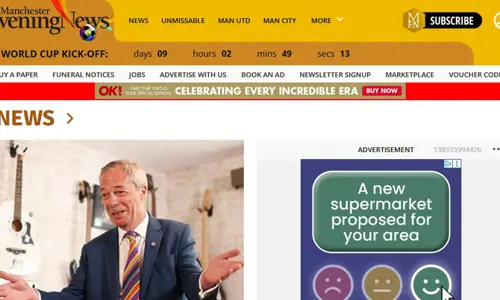
After years of resisting paywalls, Reach is now launching them across its titles. But David Higgerson, Reach’s chief content officer, carefully avoided the word ‘U-turn’ when interviewed by Steve Dyson.
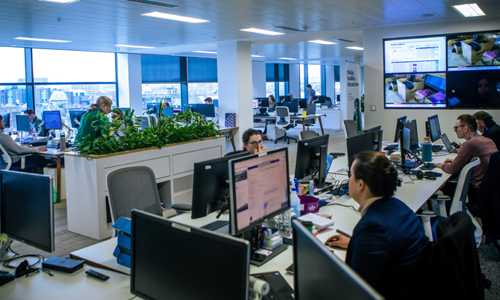
It’s one thing to think that readers should pay for your journalism, but the reality is that unless you improve your offering, then you will struggle to start charging for it, as DC Thomson Editor-in-Chief Frank O’Donnell tells Ciar Byrne.

How can you edit a regional newspaper when you never visit the area you’re writing about? By filling it with generic content, an approach that National World’s David Montgomery, the new owner of JPI Media, is rapidly doing away with.
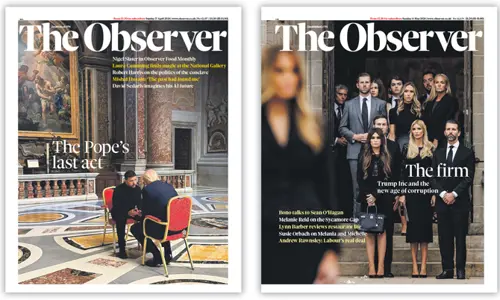
Ray Snoddy talks to Co-CEO Rich Furness about the thinking behind Tortoise Media’s acquisition of the world’s oldest Sunday newspaper and about their plans for its future.
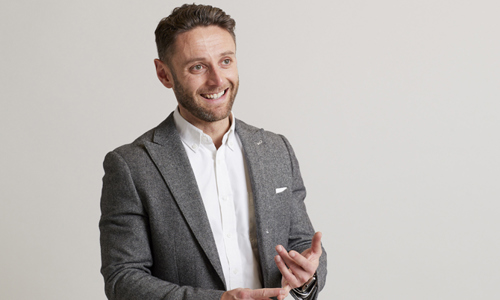
What’s the outlook for national news media in 2024? Christian Broughton, CEO of The Independent, looks ahead.
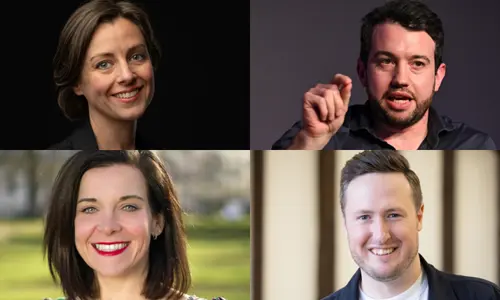
There is a new generation of entrepreneurs launching local media businesses, bringing with them new ideas on business models and funding. Phil Clark looks at some of the stand-out examples.

With Meta backing away from ‘news’ and AI accelerating the growth of disinformation, we need to redouble our efforts to safeguard access to quality journalism, says News Media Association Chief Executive Owen Meredith.
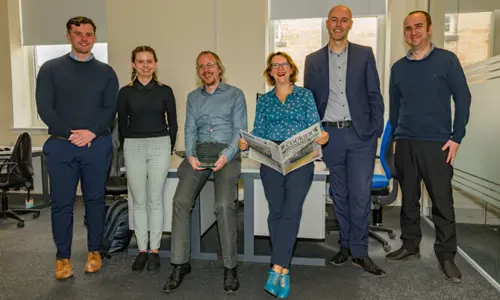
East Lothian is not just the best place to live – it has the best newsbrand too. Alan Geere heads over the border to find out what’s happening in the world of Scottish weeklies.

Three charities will benefit from The Times Christmas Appeal launched last week.

Newspapers throughout the group have been told jobs will go and payments for working bank holidays and weekends and mileage rates will be cut, reports the NUJ.

The Independent Press Standards Organisation (IPSO) today announced the launch of the IPSO mark, a visual symbol that can be used by all its publications to show their commitment to professional standards and an edited, regulated product.

Following a year-long pilot, the Independent Press Standards Organisation (IPSO) this week announced the details of its low-cost arbitration scheme, featuring much-reduced costs for claimants.

Newsquest Hampshire has launched a new weekly title serving the town and surrounding communities of Eastleigh.

For the full-year ended 30 September 2017, DMGT has reported revenues of £1,660m, an underlying increase of 1%.

Whether it’s performance league tables for hospitals and schools, the number of donated pennies per pound spent on charitable causes or, perhaps more subjectively, Arsenal’s appetite for possession over goals, focus on critical ‘outcomes’ is lacking

The output from this year’s Publishing Futures project is not so much a report, but more of a diagnostic tool. It provides the structure for publishers to “run the ruler” over their operations to get a better sense of how their business is functionin

James Evelegh’s roundup of some of the news stories that caught his eye during September and October.

If any publisher still harboured any doubts as to the nature and scale of the challenges they faced, this year would have helped dispel them. In what has been a challenging twelve months, writes Peter Preston, there was one small fillip: the demand f

The press likes to draw a distinction between its quality-controlled output and the unregulated rubbish on social media. Yet, writes Liz Gerard, sloppy reporting, an unwillingness to provide context and an increasing tendency towards agenda-driven jo

There is constant pressure on publishers to increase their output, both quantity and quality. As Phil Walker, MD of publishing software specialists PCS, tells James Evelegh, “in an always-on world, you’ve got to be always on”, yet most editorial team

It was the year the US president kept up his assault on the press as ‘fake news’ and in the UK, some in the media were accused of being unpatriotic and wanting Brexit to fail. There was also some self-criticism. How did journalists fail to predict Th

At the recent AOP Convention, Juan Señor and Nic Newman presented a compelling case for news providers switching from an ad-funded model to a reader-funded one. James Evelegh listened in and, here, paraphrases what he heard.

Earlier this year, Trinity Mirror asked former executive Mark Hollinshead to review how it should tackle increasingly tough advertising markets. Steve Dyson reports on his findings.
