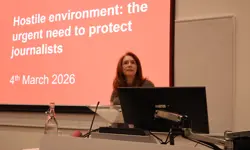
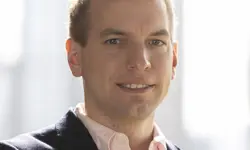
Earlier this month, Salvadoran journalist Carlos Dada, co-founder and editor-in-chief of El Faro, gave this year’s Reuters Memorial Lecture, entitled ‘Journalism as resistance’.
In it, he warned of the dark forces of populism and the dire consequences that await societies that succumb to their superficial appeal: “A far-right, populist, autocratic wave is taking the world by storm and breaking all the rules, and journalists, as in every authoritarian regime or dictatorship, no matter its ideological foundations, are labelled as enemies.”
He continued: “Discourses that remained hidden or on the margins for decades have now become mainstream, encouraged and embraced by political leaders. The language sounds somewhat familiar. The hate speech, the calls to nationalism, the construction of the other, the racist language, the tribal language, the populist language. It’s always language. All of this has intoxicated public discourse.”
And, he says, because “most of these regimes are built on half-truths or lies… any discipline or institution dedicated to searching for the truth – academia, journalism, science, the humanities – is an obstacle to be overcome and silenced.”
Dada has seen this scenario play out in his home country, El Salvador.
Dada recounts how El Salvador’s president, Nayib Bukele, a young and charismatic, social-media savvy businessman, swept to power in democratic elections in 2019, campaigning against established elites and promising a crack down on the gangs.
Having won power, he proceeded to quickly degrade the country’s democratic institutions and knobble bodies like the Supreme Court.
Dada said: “A recent study done by the Jesuit-run Central American University found that, between 2019 and 2024, Bukele’s regime enacted at least 335 executive or legislative decrees that increased his concentration of power.”
Under a state of emergency, known as the Exception Regime, declared to tackle the gangs, due process is routinely circumvented: “Around 100,000 Salvadorans have been imprisoned, without any accusation, and subject to secret, mass trials if they are lucky. Today, El Salvador holds the dubious distinction of having the world’s highest incarceration rate. Up to 2% of the population is now in prison. Among them are minors, human rights or environmental defenders, political opponents, victims of neighbours’ false accusations or simply people who crossed paths with a police officer having a bad day or who had not yet hit the arrest quota demanded by commissioners.”
Two recent polls referenced by Dada show the dichotomy. The first showed that “half the population is afraid of publicly expressing their opinion or criticising the government”. The second, in a poll in Chile, thousands of kilometres away from El Salvador, people were asked to mention a politician they admire. Half of them answered Nayib Bukele.
The Salvadoran president instils fear and admiration in equal measure.
In today’s world, an effective social media strategy, a charismatic and manipulative mindset and a complete disregard for democratic norms, can prevail.
Dada’s own news organisation, El Faro, is now in exile, but under constant surveillance and harassment.
It’s a brilliant lecture (which you can read in full here, or watch the video) which details what happens when a society drops its guard and allows due process to be dismantled.
(Finally, we are finalising the mailing list for the March / April issue of InPublishing magazine, which includes the ‘subscriber retention’ special feature. To be added to the free list, please register now.)
You can catch James Evelegh’s regular column in the InPubWeekly newsletter, which you can register to receive here.