How can one man melt down the global trading system was the question Emily Thornberry posed as a panel guest on Laura Kuenssberg’s BBC Sunday political show. The same day her boss, Prime Minister Keir Starmer had made the curious choice of The Sunday Telegraph to pen an article warning the “world as we knew it has gone”, virtually delivering a highly contentious obituary on globalisation that generated intense media coverage at home and abroad. But Thornberry’s question is the one set to keep on taxing both governments and the media in these extraordinarily dangerous times.
Let me kick off this column with a personal insight. When I knew Donald Trump well personally in the early / mid 80s he was already obsessed with the notion America was being ripped off by other nations with tariffs as his chosen weapon of retaliation. Nothing changed that obsession between those days when he was merely a controversial, publicity-addicted, uber ambitious New York businessman through his journey (with more than a little help from a TV show called ‘The Apprentice’ to the White House. Except for the trifecta scale of his Trump 2.0 election victory that convinced him he can indulge his tariff war obsession beyond the restraints of Trump 1.0 when some grown ups willing to talk truth to power were still resident. Not least because (as this column predicted immediately after his election win) that he now sees himself more an American Monarch / Global Emperor than a conventional POTUS with an obedient, sycophantic court around him with — at least until the weekend — the richest man on Earth as his court jester. Narcissism reigns.
I’m hardly an Elon Musk fan, as readers of this column will know, but one of the more positive headline themes at the weekend was the X and Space X tycoon telling an Italian political rally that he favours free trade over tariffs and launching a personal attack on X against Trump’s trade guru and chief tariff architect, Peter Navarro. As Trump’s tariff blitz wiped trillions of the global economy, perish the thought Musk’s motivation was solely the $18bn loss he suffered on his Tesla stock alone.
Pity, perhaps, that Musk’s personal opinion poll unpopularity across the US and Europe might not undermine Trump’s narcissistic determination to establish a New Global Order... sorry New Global Disorder. Ironic, too, that Musk, along with Trump, was the subject of worldwide public street protests over the tariff declaration, albeit it was over his DOGE chainsaw wielding role slashing a trillion dollars off the cost of institutional America with the resulting employment bloodbath. Whether Musk’s tariff ‘revolt’ severs the Trump / Musk umbilical cord remains to be seen, given it was a ‘bromance’ built partly on the tycoon bankrolling much of the president’s election campaign and a shared dream of making America the country that colonises Mars!!
Certainly Starmer and Macron were among those who wouldn’t demur for once from Musk’s Bloomberg reported remark that, “both Europe and the United States should move, ideally, in my view, to a zero-tariff situation, effectively creating a free trade zone between Europe and North America.” But are you listening, Mr President?
Front page reaction
The speed and scale of Trump’s misnomer of ‘Liberation Day’ tariff war declaration certainly dominated the headlines as heavily in the UK as anywhere. Not that Trump, who insouciantly took to his Florida golf course as the markets imploded, wouldn’t have enjoyed being the focus of such massive media coverage, no matter how hostile. Narcissism reigns again.
Just a sample: ‘MELTDOWN’ — the bold single world Daily Mail splash (April 4) followed by, ‘Global stock markets plunge £2TRILLION as Trump’s tariffs cause calamity for investments and pensions’. The M-word was also the first reaction I posted online.
‘Trillions lost as Trump tariffs hit global stocks’, The Times front page the same day. It was backed up by a particularly sharp leader headlined ‘Lamentation Day’, sub-headed ‘Donald Trump’s assault on global free trade threatens recession at home and abroad. His universal tariffs on imports will do far more harm to US consumers than good’.
Injecting a touch of humour into a dire situation, the leader’s opening paragraph read: “The penguins of Heard Islands, a fastness of volcanic rock lost in the southern Indian Ocean towards Antarctica, have no idea what they have done to upset Donald Trump”, flagging up that a territory occupied solely by penguins incurring a 10% tariff rate illustrate the haphazard nature of Trump’s actions.
Reverting to a more serious tone, the leader warned: “Not since the disastrous Smoot-Hawley tariffs of 1930, which deepened the Great Depression, has America resorted to such self-defeating fortress economics. The nation that was leading the way out of the post-pandemic downturn now risks an unnecessary global recession caused by one man’s simplistic attempt to reinstate the US as a dominant manufacturer.” The leader ends with a reversion to humour by concluding “Sir Keir Starmer, meanwhile, can content himself that he and his team have at least matched the ‘mate’s rate’ secured by the penguins of Heard Island.”
King Charles to the rescue?
Mate’s rates? A term that could easily apply to the prime minister’s reluctance to match other world leaders in outright attacks on Trump, while delivering a low-key disowning of the president’s televised Air Force One interview claiming Starmer was very ‘pleased’ with the UK’s tariff treatment. Such is the surviving hope in Downing Street that, with more than a little help from King Charles’s state visit invite, can yet secure a favourable ‘mate’s rate’ special trade deal. But, judging by a radio phone-in gig I was just involved in, opposition is growing among the UK public to the whole idea of that theatrically excruciating Oval Office invite the prime minister extended to a preening Trump. Although it can hardly be withdrawn, it could yet trigger public protest levels that would stress test the government on balancing policing with the democratic right to protest and the risk that it could undermine rather than enhance special deal prospects with a notoriously thin-skinned POTUS. Catch22? Indeed, my own royal sources largely echo an item in the latest Private Eye suggesting Starmer pressed the King to go along with the swift invite offer against the advice of seasoned Palace advisers who could see major trouble ahead.
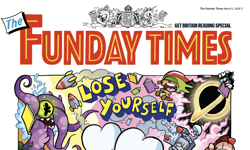
The latest Sunday Times front page headline predicts Starmer “to admit globalisation has failed as tariff war rages”. This week, according to the paper, the PM will “argue that tariffs are the wrong response but will also say he understands Trump’s economic nationalism and why it is popular with voters who believe they have seen no benefits from free trade and mass immigration.” But the notion that globalisation is over seems a drastic stance not shared by most economists, the business world and a growing number of Capitol Hill Republicans who fear an inflation-driven backlash could cost them Congress in next year’s mid-term elections unless their unpredictable president stages a tariff retreat while still hailing it an historic ‘victory’.
For its part, The Observer splashed with the headline: ‘Starmer orders economic reset amid Trump tariff mayhem’. The consensus among papers left and right is that the PM and chancellor will have to consider (in the name of ‘pro-growth’) easing regulations on electric car manufacturers, consider bowing to Trump’s tax break demands for US Big Tech, despite the negative impact it could have on the UK’s online protection legislation. But other likely and unpalatable trade demands could include increased access to the NHS and agriculture, including the toxic chlorinated chicken issue, that even a UK government desperate for a deal couldn’t stomach.
Brexit benefit?
One limited consolation for Keir Starmer is that the majority of UK papers are united in opposing Trump’s tariff onslaught and largely support him in not — so far — striking the aggressive personalised tone of some EU leaders. Although the Telegraph and Mail stretched things by trying to claim Brexit as the reason Britain only rated a 10% tariff listing. Certainly, stretching things when the opinion polls consistently show the public now regret Brexit and most credible economists produce the stats showing the hefty damage to benefit ratio and that, in the unreliable era of Trump 2.0, closer alliances with our European trading partners makes much greater, safer sense.
In a Trump-dominated edition, the Sunday Times features a convincing double-page breakdown by its political team of Tim Shipman and Caroline Wheeler headlined, ‘Feeling the burn’... with a secondary head saying ‘Britain got a ‘friends and family’ deal from the US president but tariffs may still turn the government’s economic plans to ashes, Is it time for a reset?’ The well-informed opening paragraphs tellingly accurate: “When a senior figure in the government called the White House on Wednesday morning to find out how bad Donald Trump’s tariffs were going to be for Britain, information was scant. Even the president’s aides were in the dark about what he would decide. At 9pm that evening, Sir Keir Starmer sat down in 10 Downing Street and watched the television, just like the rest of us, to discover what the US president had in store. The blanket tariff of 10% was half what Trump slapped on the EU — but they still wrecked the government’s economic calculations just one week after the spring statement.”
It quoted one No10 official as saying, “The president thinks he has given a ‘friends and family’ deal to Britain — and in comparison to others, he has.” But a less sanguine colleague chipped in, “With friends like these who needs enemies?”. Fair point, and even as a Labour sympathiser who predicted how tariff hellbent Trump would be, I remain baffled why Rachel Reeves failed so badly to take it into proper account in her spring statement. A case of optimism trumping realism, perhaps?
Elsewhere in the Trump-packed Sunday Times, columnist Jim Armitage offered a small note of UK optimism headlined, ‘An early present from Father Trumpas — desperate suppliers, and cheaper toys’. Based on the fact that Trump tariffs meant that China, the world’s biggest toy manufacturer, would be looking to Britain and Europe to unload at discount prices the massive market it has lost in America.
While the Sunday Times main leader headlined, ‘We can’t stop the tariffs but we can champion free trade’ illustrated the illogical, amateur absurdity of Trump’s policy with its opening paragraph, “Pity the poor garment workers of Lesotho. As a result of a crude formula that would fail a basic exam, the small, landlocked African country was hit with the highest level of American tariff — 50per cent — on Donald Trump’s ‘liberation day’ last week. The impact of the 47th president’s trade war on a nation he recently dismissed as ‘one nobody has ever heard of’...”
The various attempts by Team Trump at producing tariff selection equations has sparked much mockery among serious economists. One senior professor I know well suggested this one to me: Narcissism + stupidity + sycophancy = global catastrophe
Sunday Times columnist Josh Glancy produced a particularly sharp take headlined ‘Like Napoleon, Trump’s impulses are having an outsize impact on history’.
Physical differences aside, I took his point.
The sentence, “I’ve watched Trump closely for a decade now and what has always astonished me is the sheer effrontery of the man, his seemingly inhuman ability to slough off shame, absorb criticism and keep repeating his own convictions until reality bends itself to his will” rings loud and true as the world absorbs the earthquake shock waves from his ‘Liberation Day’ folly.
The paper’s News Review, meanwhile, was led by a guest column by shadow leader of the House of Commons, Jesse Norman, whose books include ‘Adam Smith: What He Thought and Why It Matters’. The headline spoke volumes: ‘The founding father of free-market economics would have been appalled by the Trump tariff spree. For Adam Smith, the wealth of nations depended on co-operation, an embrace of trade deficits, and lifting countries out of poverty’.
Amen to that around much of the world, but — alas — not at the White House court of King Donald and his besotted retinue of sycophants, cultists, self-serving billionaires and far right populists. If last week was an historic attempt to impose a Trumpian vision of the global order / disorder on us, Britain’s media, political leaders and a financially whiplashed working public can only brace themselves with the almost certain probability there’s a helluva lot worse to come. Unless, just maybe, King Charles III can manage to hold his nose so tight and help his beleaguered prime minister put on such a pomp-rich display of flattery that the planet’s numero uno narcissist deigns to grant us that elusive special trade deal favour. But just don’t count on it.
Another intriguing UK twist to Trump’s ally-shedding tariff tsunami could come with the May Day local elections where polls (and indeed, reluctantly, this column) recently conceded that the momentum was in Reform’s favour. Undoubtedly, Reform will still do well but Nigel Farage’s much-boasted personal closeness to Trump might stall the momentum to a degree. While Labour and Tory campaign strategists will tread carefully about focusing on it too heavily for fear of a Trumpian backlash, they will certainly be hoping enough voters make the connection sufficiently to shy away from voting Reform. You can safely bet the LibDems and Greens will have no such compunction.
5.30pm update: In the manner worthy of a Mafia Godfather, President Trump announced via his Trump Social website that China would face an extra 50% tariffs on those he imposed last week unless they withdraw by tomorrow the 34% retaliatory response they imposed, bringing the overall level to over 80%. Analysts also interpreted the move as a bid to deter other countries, including US allies, from launching their own retaliatory responses.
Earlier the NBC network ran an item saying the president was poised to put a 90 day pause on all last week’s tariff list with the exception of China. The network insisted it was based on a briefing by a senior Trump team member… The story was picked up around the world and it took the White House several hours to officially deny it and label it ‘Fake News’.
Beyond satire? Not when you have an unpredictable POTUS with an ego the size of Mt Rushmore(with an ambition to have his own head chiselled there eventually).
8th April update: As Trump threatened a defiant China with a staggering 104% tariff rate, former UK foreign secretary William Hague warned in a savvy Times column (April 8) “Beijing can now pose as the steady partner around the world, the advocate of the rules, the defender of free trade.” Under the headline ‘Tariffs show we have to take Donald Trump literally’, Hague branded the policy a ‘colossal error’ but argued that the “received wisdom on the president was wrong: he means what he says, including on Greenland and a third term.”
He continued: “Even now, there are some people consoling themselves that the tariffs won’t last long, that the pain of prices at home and retaliation abroad will soon send Trump into retreat. But listen to his actual words this time. ‘THIS IS AN ECONOMIC REVOLUTION AND WE WILL WIN’, he said on Saturday. Someone who is launching a revolution is not going to call it off a few days later.”
While there is little satisfaction in saying ‘Told You So’, but when I predicted in these columns that a re-elected Trump would be deadly serious about both a tariff-driven trade war and running for a third term, many people I respect told me I was wrong and that it was a great big election campaign bluff. While I still think he would almost certainly (note the almost) fail to pervert the US Constitution enough for a third term, I really do suspect his dynastic ambition runs to seeing his eldest son Donald JR follow him into the White House rather than JD Vance. Whether, in the wake of a prolonged trade war, American voters would buy into that in 2028 will be the very Big Question.