News
Students take the helm for Coventry Telegraph supplement
Aspiring reporters on Coventry University’s journalism course have written a 16-page Freshers feature for the Coventry Telegraph newspaper.


The newspaper business was built for a world where one product served everyone and advertising paid for most of it. That model has gone. What replaces it is still being worked out title by title, from national groups to weeklies covering a single town.
Reader revenue is the clearest shift. Even Reach, which argued for free access for years, now puts some of its journalism behind a paywall, and the regional titles doing best changed their newsrooms before they asked anyone to pay. Ownership keeps changing too. National World rebuilt local editorships after years of centralisation, and the Observer is being reinvented as a premium print and digital title under new owners.
The strongest publishers understand the difference because they are not trying to be everything to everyone. They are trying to be essential to someone.
Chris Sherrard News media
Local news is where the pressure shows most. Millions of people now live without a dedicated local title, and new reader-funded and membership startups are moving into the gaps. Platforms are pulling back from news at the same time, which leaves trust and a direct relationship with readers as the assets that matter most.
Print hasn't disappeared either. Well-run weeklies still hold on to their readers, with circulation falling slowly while digital audiences grow.
Below you'll find some of our best feature articles on news media, from reader revenue and newsroom change to ownership, local news and trust, alongside our latest news and industry commentary.

Where is the growth opportunity for today’s publishers? Douglas McCabe tracks how the commercial model has evolved over the past fifty years and examines whether a better understanding of what online audiences want, will help drive future growth.

We asked Chris Sherrard, editor-in-chief of The Irish News, what does best practice publishing look like in news media? This is what he said…
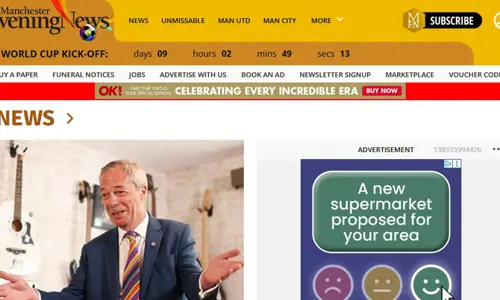
After years of resisting paywalls, Reach is now launching them across its titles. But David Higgerson, Reach’s chief content officer, carefully avoided the word ‘U-turn’ when interviewed by Steve Dyson.
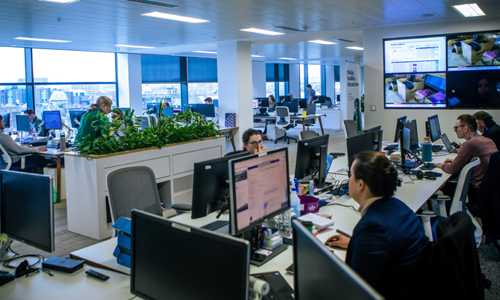
It’s one thing to think that readers should pay for your journalism, but the reality is that unless you improve your offering, then you will struggle to start charging for it, as DC Thomson Editor-in-Chief Frank O’Donnell tells Ciar Byrne.

How can you edit a regional newspaper when you never visit the area you’re writing about? By filling it with generic content, an approach that National World’s David Montgomery, the new owner of JPI Media, is rapidly doing away with.
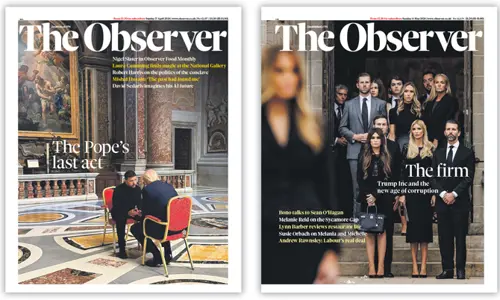
Ray Snoddy talks to Co-CEO Rich Furness about the thinking behind Tortoise Media’s acquisition of the world’s oldest Sunday newspaper and about their plans for its future.

What’s the outlook for national news media in 2024? Christian Broughton, CEO of The Independent, looks ahead.

There is a new generation of entrepreneurs launching local media businesses, bringing with them new ideas on business models and funding. Phil Clark looks at some of the stand-out examples.

With Meta backing away from ‘news’ and AI accelerating the growth of disinformation, we need to redouble our efforts to safeguard access to quality journalism, says News Media Association Chief Executive Owen Meredith.
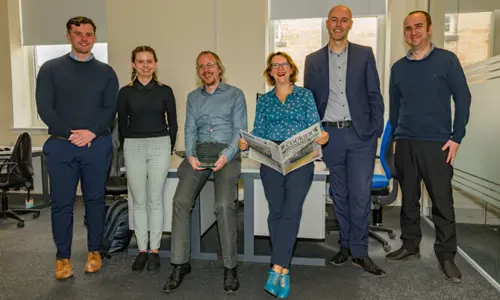
East Lothian is not just the best place to live – it has the best newsbrand too. Alan Geere heads over the border to find out what’s happening in the world of Scottish weeklies.

Aspiring reporters on Coventry University’s journalism course have written a 16-page Freshers feature for the Coventry Telegraph newspaper.

Vietnamese media managers are attending two cutting-edge training courses this week on how to run successful newsrooms and media businesses.

Amazon.com has announced that Kindle for Android, the free application that lets readers around the world enjoy Kindle books on their Android-powered devices, now includes a number of new features.

The Press Complaints Commission has upheld a complaint against the Canterbury Times, the Herne Bay Times and the Whitstable Times under Clause 1 (Accuracy) of the Editors' Code of Practice.

As publishers, writes Jim Chisholm, we are meant to be leaders in the provision of information. So are there any lessons we can learn from our external information gathering and dissemination to our internal practices?

The Guardian recently launched a social media element as part of the VisitEngland brand partnership campaign. Tom Quick, of social media specialists, Smesh, outlines the strategy behind the campaign.

Recent decisions by some publishers and wholesalers have increased newsagents’ costs and reduced their revenues. Parminder Singh says that this squeeze is not in the industry’s best interests.

Northcliffe Media last week launched an ambitious promotion for Disney Movies – The Graphic Novels.

Women in News (WIN), an initiative from the World Association of Newspapers and News Publishers (WAN-IFRA) that helps female media professionals advance their careers, will see participants from Zambia, Namibia and Botswana meet in Johannesburg next

The NFRN has released the following statement concerning the recent decision of the Sunday Times to cut retailer percentage margins.

The European Newspaper Publishers’ Association (ENPA), together with the World Association of Newspapers and News Publishers (WAN-IFRA) and the World Editors Forum, have welcomed the landmark ruling of the European Court of Human Rights concerning th

Vogue.com has teamed up with the world’s first digital styling studio in an exclusive collaboration to generate creativity and community for its audience.

Publishing software developer PCS has gained a place in the final of the prestigious 2010 UK IT Industry Awards organised by BCS the Chartered Institute for IT and Computing magazine.

On Friday, the NFRN released the following statement in relation to the announced price increase of the Sunday Times.

Secondary schools across London now have unlimited access to The Guardian and Observer Digital Archive, which stores digital copies of both newspapers all the way back to 1791.
