News
Atex COO Alan Reardon promoted to Group CEO
Atex has announced the appointment of Alan Reardon as Group Chief Executive Officer.


The newspaper business was built for a world where one product served everyone and advertising paid for most of it. That model has gone. What replaces it is still being worked out title by title, from national groups to weeklies covering a single town.
Reader revenue is the clearest shift. Even Reach, which argued for free access for years, now puts some of its journalism behind a paywall, and the regional titles doing best changed their newsrooms before they asked anyone to pay. Ownership keeps changing too. National World rebuilt local editorships after years of centralisation, and the Observer is being reinvented as a premium print and digital title under new owners.
The strongest publishers understand the difference because they are not trying to be everything to everyone. They are trying to be essential to someone.
Chris Sherrard News media
Local news is where the pressure shows most. Millions of people now live without a dedicated local title, and new reader-funded and membership startups are moving into the gaps. Platforms are pulling back from news at the same time, which leaves trust and a direct relationship with readers as the assets that matter most.
Print hasn't disappeared either. Well-run weeklies still hold on to their readers, with circulation falling slowly while digital audiences grow.
Below you'll find some of our best feature articles on news media, from reader revenue and newsroom change to ownership, local news and trust, alongside our latest news and industry commentary.

Where is the growth opportunity for today’s publishers? Douglas McCabe tracks how the commercial model has evolved over the past fifty years and examines whether a better understanding of what online audiences want, will help drive future growth.

We asked Chris Sherrard, editor-in-chief of The Irish News, what does best practice publishing look like in news media? This is what he said…

After years of resisting paywalls, Reach is now launching them across its titles. But David Higgerson, Reach’s chief content officer, carefully avoided the word ‘U-turn’ when interviewed by Steve Dyson.

It’s one thing to think that readers should pay for your journalism, but the reality is that unless you improve your offering, then you will struggle to start charging for it, as DC Thomson Editor-in-Chief Frank O’Donnell tells Ciar Byrne.

How can you edit a regional newspaper when you never visit the area you’re writing about? By filling it with generic content, an approach that National World’s David Montgomery, the new owner of JPI Media, is rapidly doing away with.
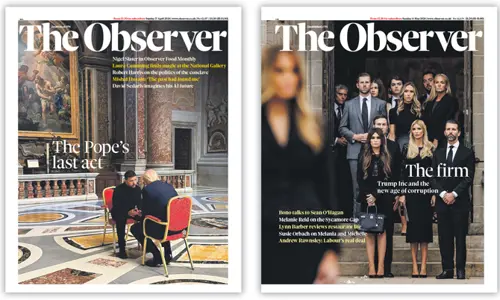
Ray Snoddy talks to Co-CEO Rich Furness about the thinking behind Tortoise Media’s acquisition of the world’s oldest Sunday newspaper and about their plans for its future.

What’s the outlook for national news media in 2024? Christian Broughton, CEO of The Independent, looks ahead.

There is a new generation of entrepreneurs launching local media businesses, bringing with them new ideas on business models and funding. Phil Clark looks at some of the stand-out examples.

With Meta backing away from ‘news’ and AI accelerating the growth of disinformation, we need to redouble our efforts to safeguard access to quality journalism, says News Media Association Chief Executive Owen Meredith.
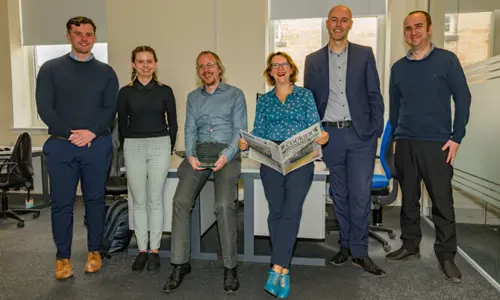
East Lothian is not just the best place to live – it has the best newsbrand too. Alan Geere heads over the border to find out what’s happening in the world of Scottish weeklies.

Atex has announced the appointment of Alan Reardon as Group Chief Executive Officer.

Will paper, even computers, disappear in favour of virtual worlds? Magazine readers of the future may be able to call up information from virtually any source onto virtually any surface. The following case study is taken from the Innovations in Magaz

The quest for combined on and offline readership figures took another step forward, writes Katherine Page, with the recent NRS appointment of UKOM/Nielsen to supply the data for the testing phase of Project Fusion.

Jim Chisholm looks at recent research into women’s online usage patterns and assesses what it means for publishers.

Southampton Football Club’s decision to take the unprecedented step of refusing all photographers access to home matches has been roundly condemned by local and national newspapers.

YOC Ltd, the UK arm of YOC Group, has gained Eurosport and The Racing Post as new publishers.

Fashion and culture enthusiasts around the world will now be able to access Dazed & Confused from anywhere at any time, with the release of the new Dazed & Confused iPhone and iPad app this week.

Archant has announced a period of increased profitability for the first six months of 2010.

The JICREG Guidelines for readership research outline the methods and procedures that are acceptable for research that wishes to be included on the JICREG database.

The Press Complaints Commission has published its ruling in a case against the Birmingham Mail and Birmingham Mail Extra, following a complaint made under Clauses 3 (Privacy), 5 (Intrusion into grief or shock) and 8 (Hospitals) of the Editors' Code o

The International Herald Tribune has announced that the prime minister of Portugal, H. E. José Sócrates Carvalho Pinto de Sousa, will open the IHT Global Clean Energy Forum, taking place at the Four Seasons Hotel Ritz Lisbon on September 30 and Octob

Newspaper circulation world-wide fell just slightly in 2009 despite the economic downturn, and the impact of the global recession on newspaper advertising revenues appears to be easing, the World Association of Newspapers and News Publishers said in

IPC Media web technology director Kelly Waters has announced the promotion of Tara Whitaker to programme director, IPC Digital, with immediate effect.

Autosport.com’s new app has shot straight to number one in the iPhone App Sports Chart (for paid-for apps), says Haymarket.

Daily Mail editor Paul Dacre is Chairman of the Editors' Code of Practice Committee. Below is his annual report for 2009-10.
